

 Current position > News detail
『Flow Meter Water Treatment Plant Sizing: Optimizing Chemical Dosing and Influent Mainline Monitoring』Related information(clamp on meter|electromagnetic meter|venturi meterrotameter|orifice meter|ultrasonic flow meter|mass flow meter|coriolis mass flow meter|coriolis flow meter|magnetic flow meter|magmeter flow meter|magflow flow meter|mag meter flow meter|electromagnetic flow meter|vortex flow meter|turbine flow meter|thermal mass flow meter|thermal flow meter|rotameter flow meter)
Flow Meter Water Treatment Plant Sizing: Optimizing Chemical Dosing and Influent Mainline Monitoring
Quick Answer
For influent mainline flow monitoring, select a Silver Automation Instruments SEM series electromagnetic flow meter sized from DN300 to DN1200 with 4-20 mA HART output. For chemical dosing, use an SCM-C Coriolis mass flow meter for non-conductive polymer or an SOG-M oval gear flow meter for flows under 20 L/h. Send us your pipe size in DN, flow range in m3/h or L/h, chemical name, viscosity in cP, and pressure in bar. We will send a matched model within one business day.
Why Flow Meter Sizing Is Different in Water Treatment Plants
Water plants run two very different flow loops. The influent mainline is high flow, low pressure, and often dirty. Chemical dosing lines are low flow, small bore, and sometimes pulsed. A meter that works on one loop fails on the other. Many engineers size a meter based on pipe diameter alone. That causes rangeability problems. A DN100 meter on a DN100 line may never see its minimum flow. A DN15 meter on a dosing line may read zero for most of the day.
In practice, flow range and chemical compatibility decide the meter type. You also need to think about straight run, liner material, electrode material, and output signal. Most engineers skip this part until a meter drifts or clogs. We have seen this on customer sites many times.
Influent Mainline Monitoring: What Works in Real Plants
Main influent lines carry raw water from rivers, lakes, wells, or desalination feed. A 20 MLD plant may run 800 to 1000 m3/h. Pipe size often falls between DN350 and DN900. Electromagnetic flow meters fit this service well. Raw water has enough conductivity and the meter has no moving parts. We supply full bore electromagnetic flow meters with rubber or PTFE liners and 316L electrodes. Output is 4-20 mA HART to connect to SCADA or a paperless recorder.
A customer in Surabaya, Indonesia ordered a Silver Automation Instruments SEM series DN600 electromagnetic flow meter for raw water intake. The site required IP68 sensor housing because the chamber can flood during the rainy season. Accuracy was 0.5 percent of reading. The meter used replaceable electrodes to simplify maintenance.
Chemical Dosing Flow Meter Sizing: Four Parameters That Matter
Chemical dosing lines in water treatment often run from 0.5 L/h to 500 L/h. Pressure may be 2 to 10 bar. Temperature is usually 20 to 40 °C. The four key parameters are flow range, viscosity, conductivity, and chemical aggressiveness. For alum dosing at 30 L/h, a small electromagnetic flow meter works if conductivity is high. For polymer at 60 cP, use a Coriolis mass flow meter or an oval gear flow meter. For sodium hypochlorite at 50 L/h, use an electromagnetic flow meter with PTFE liner and titanium electrodes.
Here is the thing. The chemical name is not enough. You need the full concentration and carrier fluid. A 1 percent polymer solution behaves differently from a 10 percent solution. Viscosity changes with temperature and shear. We always ask for actual process data before quoting.
Meter Type Comparison for Chemical Dosing
Electromagnetic flow meters work when conductivity is above 5 µS/cm. They have no moving parts. They handle acids, caustic, and ferric chloride well. They cannot measure non-conductive chemicals like some polymers and oil based additives. Coriolis mass flow meters handle non-conductive fluids and viscosity changes. They measure m
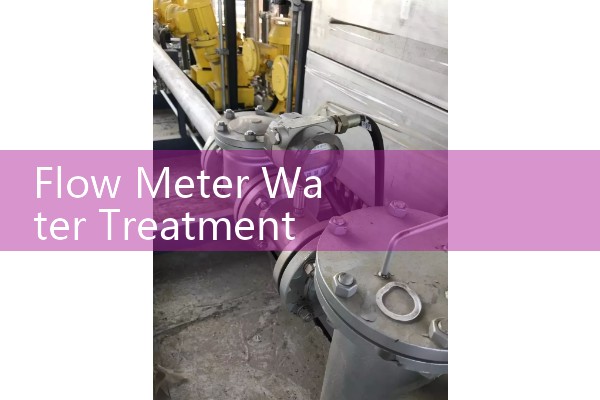
Oval gear flow meters are low cost for clean, lubricating or non-lubricating liquids from 0.1 L/h to 500 L/h. We have seen oval gear meters on polymer skids in the Philippines. The gears are PTFE or 316L depending on chemical. We also supply thermal mass flow meters for ammonia gas feed in chlorination rooms.
Sizing Example: A 15 MLD Surface Water Plant in Peru
A plant near Lima, Peru needed flow meters for raw water intake and PAC dosing. Raw water line was DN500. Flow range 400 to 900 m3/h. We supplied a Silver Automation Instruments SEM series DN500 electromagnetic flow meter with 4-20 mA HART and 0.5 percent accuracy. PAC dosing line was DN15. Flow range 5 to 60 L/h. Conductivity above 100 µS/cm. We supplied a DN15 electromagnetic flow meter with PTFE liner and Hastelloy C electrodes.
The customer also wanted a recorder. We supplied a paperless recorder with analog inputs for both meters. This setup reduced chemical overdosing by about 12 percent in the first month. The plant now uses this data for weekly dosing audits.
Installation Notes for Influent Mainline and Dosing Lines
Influent electromagnetic flow meters need 10D upstream and 5D downstream straight run. Grounding rings are required on plastic pipes. For chemical dosing, install the meter close to the injection point but after the pulsation dampener. Use a strainer before oval gear meters. For Coriolis meters, avoid pipe stress. Use supports or brackets. 4-20 mA HART wiring is standard. Use shielded twisted pair cable. Keep signal cables away from VFD power cables.
FAQ
Here are five common questions from water treatment plant engineers and procurement teams.
What flow meter size do I need for a DN600 influent mainline?
Use a full bore DN600 electromagnetic flow meter. It handles flow up to about 2500 m3/h depending on water velocity. Ask for 4-20 mA HART output and IP68 sensor if the pit can flood.
Can an electromagnetic flow meter measure polymer dosing?
Only if the polymer solution is water based and conductivity stays above 5 µS/cm. Many polymer solutions have low conductivity. In that case use a Coriolis mass flow meter or an oval gear flow meter sized for the actual L/h range.
What is the minimum flow rate for chemical dosing meters?
Oval gear meters can read from 0.1 L/h. Small electromagnetic flow meters can read from about 0.5 L/h depending on DN size. Coriolis mass flow meters can read from 0.5 kg/h or less for some models.
Do I need a straight run for a dosing flow meter?
Yes. A small dosing meter still needs 5D upstream and 3D downstream after a pump. Install a pulsation dampener before the meter to avoid unstable reading.
What output signal should I choose for water treatment plant flow meters?
Use 4-20 mA HART. It connects to SCADA, PLC, and paperless recorders. Optional Modbus RTU or RS485 is available for longer networks.
Contact Silver Automation Instruments
Send your pressure in bar, temperature in °C, pipe size in DN, and flow range in m3/h or L/h. Tell us the chemical name and concentration for dosing lines. Tel: +86-25-68650347. Whatsapp: +86-25-52155837. WeChat: +86 15365082610. We serve water treatment plants in Southeast Asia, Latin America, Africa, and the Middle East.