

 Current position > Product detail
『How Does An Ultrasonic Flow Meter Work? Principles And Key Industrial Applications』Related information(clamp on meter|electromagnetic meter|venturi meterrotameter|orifice meter|ultrasonic flow meter|mass flow meter|coriolis mass flow meter|coriolis flow meter|magnetic flow meter|magmeter flow meter|magflow flow meter|mag meter flow meter|electromagnetic flow meter|vortex flow meter|turbine flow meter|thermal mass flow meter|thermal flow meter|rotameter flow meter)
How Does An Ultrasonic Flow Meter Work? Principles And Key Industrial Applications
Quick Answer: An ultrasonic flow meter clamps onto the outside of a pipe and sends sound waves through the liquid. It calculates flow rate by measuring how much the moving fluid shortens or lengthens the signal travel time. No pipe cutting, no contact with the medium, and direct readings on pipes from DN15 up to DN6000 make these meters popular for water, chemicals, oils, and many process liquids. We ship these instruments to pump stations in the Middle East, food plants in Southeast Asia, and desalination projects in Australia every month.
In practice, most engineers skip the deep math and go straight to the selection rules. If you have clean water or hydrocarbons, pick a transit-time meter. If your fluid carries bubbles, suspended solids, or sludge, you need a Doppler meter. This simple split saves hours of spec review on a Friday afternoon before shutdown.
How Ultrasonic Flow Meters Work: Transit-Time vs Doppler
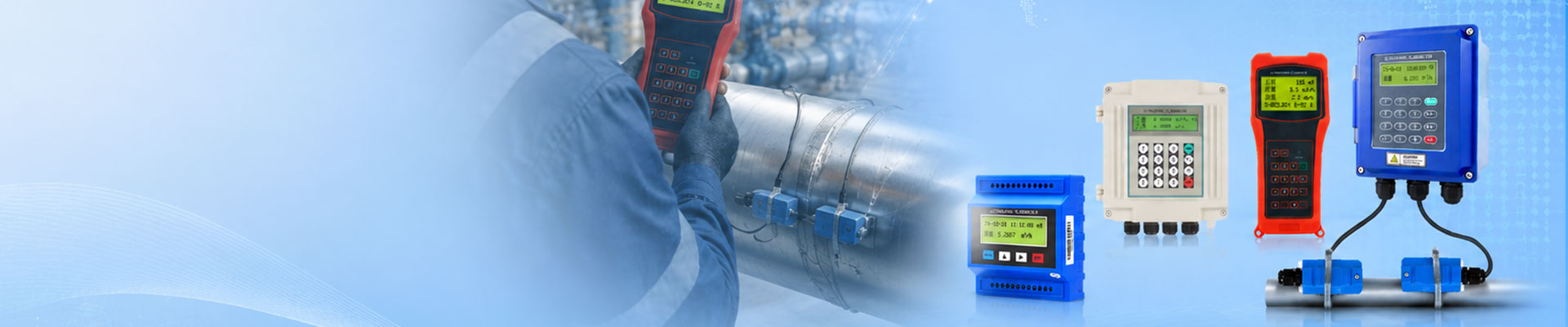
A transit-time meter uses two transducers clamped on the pipe surface, one upstream and one downstream. Each transducer fires a short burst of 1 MHz to 2 MHz sound through the pipe wall and fluid. With no flow, both bursts travel at the same speed. When liquid moves, the downstream pulse speeds up and the upstream pulse slows down. The meter measures the time difference between the two arrivals. That differential, often in picoseconds, is directly proportional to average flow velocity. Multiply velocity by the known pipe cross section and you get volumetric flow rate in m3/h or L/s.
Doppler meters work on a different principle. They send continuous ultrasonic waves into the liquid and listen for frequency shifts reflected by particles, bubbles, or density interfaces. The frequency shift follows the classic Doppler effect. If the fluid is a slurry with at least 100 ppm of suspended solids or aeration, the signal comes back clear. A lot of wastewater plants in Vietnam and Brazil choose the Doppler method exactly because their lines carry activated sludge or raw sewage with variable turbidity.
Here is the thing. Both methods need a fully filled pipe and a reasonable straight run upstream. Most engineers skip this part during site surveys and then call us when the meter reads low. A rule we repeat on customer sites: 10 diameters straight run upstream and 5 diameters downstream for transit-time. For Doppler, you can often get away with 8 diameters up and 3 down, but always check the coupling condition.
Why Engineers Choose Clamp-On Ultrasonic Flow Meters
Clamp-on installation eliminates flanges, gaskets, and welding. A maintenance team in a Chilean copper mine once replaced three inline electromagnetic flow meters with a single portable clamp-on ultrasonic unit and cut their shutdown time from two days to four hours. Because the sensors never touch the fluid, you can meter strong acids, caustic soda, or seawater without worrying about electrode corrosion or liner swelling.
Pressure drop is zero. For long-distance water pipelines in remote areas of Australia, every bar of pressure loss costs real money in pumping energy. With a clamp-on design, you avoid orifices, V-cones, and any intrusion into the flow profile. We have also supplied ATEX Zone 1 certified units for crude oil custody transfer in Saudi Arabia, where non-intrusive sensing means no risk of leak paths in flammable service.
Temperature range on our Silver Instruments transit-time models spans from -40 °C up to 200 °C with high-temperature coupling pads. We have seen this setup work reliably on heat transfer oil loops at 180 °C in a chemical plant outside Bangkok for over three years without re-greasing.
Key Industrial Applications with Real-World Details
A large desalination plant in Oman uses clamp-on ultrasonic flow meters on DN1200 seawater intake lines and on the reject brine r
In oil and gas, transit-time meters handle diesel, light crude, and lube oils without moving parts. We recently quoted a distributor in Nigeria who needed to measure heavy fuel oil at 150 °C and 20 bar. Because the pipe was API 5L carbon steel, we recommended a dual-path transit-time meter and provided coupling sheets rated for that exact temperature and material combination.
Food and beverage plants use ultrasonic meters to avoid contamination. A dairy in New Zealand replaced a turbine meter with a clamp-on unit on a CIP return loop. The meter measures spent caustic solution at 85 °C and 2 bar, and the clamped sensors never trap product. Chemical dosing skids that blend methanol, sodium hypochlorite, or citric acid prefer small DN15 to DN25 clamp-on spools, which we also build in 316L stainless steel with PT100 temperature input for mass flow calculation.
Two other spots where we see strong demand: HVAC chilled water loops in commercial buildings across Singapore and irrigation pump stations in remote Western Australia. The same portable meter can move from one test point to another in minutes, and the data is accessible over Modbus RTU.
Parameters You Must Specify for an Ultrasonic Flow Meter Quote
Send us your fluid type and pipe details before we suggest a model. We ask for pipe outer diameter (DN or inches), wall thickness, material (carbon steel, stainless steel, PVC, HDPE, GRP), and the presence of any internal lining. For the process, tell us the normal and maximum flow rate in kg/h, m3/h, or L/min, along with operating pressure in bar and temperature in °C. If you need output signals, specify 4-20 mA HART, pulse, Modbus, or wireless options.
We often ship a Silver Instruments clamp-on meter preconfigured with your pipe parameters and coupling film already applied. You remove the backing, strap it on, and wire power. For inline spool variants, give us your end connection standard: ANSI 150 flange, Tri-Clamp, or threaded BSP. Then one of our application engineers in the Philippines or Morocco will confirm the model and lead time within one working day.
FAQ: Ultrasonic Flow Meter Selection and Operation
Can ultrasonic flow meters measure gas or steam? Our clamp-on and inline ultrasonic meters are designed for liquids only. For compressed air, natural gas, or steam, we offer thermal mass flow meters that work on a totally different principle.
What is the minimum pipe size for a reliable measurement? DN15. Below that, the transducer footprint cannot couple properly and uncertainty climbs fast. For micro-flows, a small oval gear flow meter often gives better repeatability.
Do ultrasonic meters work on dirty water? Yes, but you must select the correct technology. Transit-time struggles with heavy solids. Doppler type handles slurries and raw wastewater well. When you order, just tell us the typical NTU or ppm of suspended solids so we set the right path.
How accurate are clamp-on ultrasonic flow meters? Under ideal straight pipe and stable temperature, we typically achieve ±1 % of reading for transit-time and ±2 % for Doppler. Portable models used for spot checks may be closer to ±1.5 %, which is still accepted in water audit programs across Southeast Asia.
Can I install the meter myself? Most teams do the physical mounting with a quick training video. The key is clean pipe surface, correct spacing, and enough gel. If you are in a remote area, we can send a technician from our partner network in your region.