

 Current position > News detail
『Thermal gas flowmeter』Related information(clamp on meter|electromagnetic meter|venturi meterrotameter|orifice meter|ultrasonic flow meter|mass flow meter|coriolis mass flow meter|coriolis flow meter|magnetic flow meter|magmeter flow meter|magflow flow meter|mag meter flow meter|electromagnetic flow meter|vortex flow meter|turbine flow meter|thermal mass flow meter|thermal flow meter|rotameter flow meter)

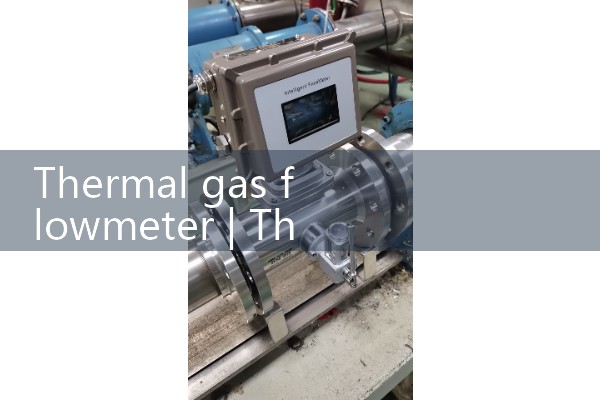
1.Thermal gas flowmeter
2. Units of thermal gas flowmeter
The unit of thermal gas flowmeter mainly depends on the measurement principle and display settings, usually in volume flow units or mass flow units.. 1. Absolute flow rate unit • cubic meter/hour (m ³/h): The most commonly used unit of volumetric flow rate, suitable for industrial process control. • liters per minute (L/min): commonly used in small pipelines or laboratory environments. • Standard cubic meter per hour (Nm ³/h): Refers to the volumetric flow rate of gas at standard conditions (0 ° C, 101.325kPa), used for trade settlement and energy consumption measurement
2. Mass flow unit • Kilogram per hour (kg/h): A unit for directly measuring gas mass flow rate, with high accuracy and not affected by temperature and pressure. • Ton/hour (t/h): Used for high flow gas measurement, such as power plant flue gas monitoring
3. Other commonly used units • Foot ³/minute (CFM): British unit, commonly used in ventilation systems in North America. • Gallons per minute (GPM): mainly used for liquid measurement, but some gas flow meters can also switch display
4. Unit conversion and setting - Contemporary thermal flow meters usually support multi unit switching and need to be set in the instrument menu. -If the display unit is SCFM (standard cubic feet per minute) or SLPM (standard liters per minute), it means that it has been automatically compensated to the standard state. -Attention: The volumetric flow rate in non-standard conditions can only be converted to accurate values by compensating with temperature/pressure sensors
5. Selection and usage precautions - For industrial sites, Nm ³/h or kg/h should be preferred to avoi
3. What is the formula for a thermal gas flowmeter?
The core formula for a thermal gas flowmeter is related to mass flow rate, and the common form is Q=K × Δ T/(I × R). Before understanding this formula, lets first talk about its application background.
. Thermal gas flow meters are often used in industrial, laboratory, and other scenarios, such as monitoring gas flow rates in large pipelines or factory exhaust emissions. Its principle is to sense the heat carried away by the gas flow through a heating element and calculate the flow rate accordingly. 1. Formula disassembly: Q in the formula represents mass flow rate, usually measured in kg/s; K is the instrument coefficient, determined by the characteristics of the equipment itself; Δ T is the temperature difference, which refers to the temperature difference between the heating element and the gas; I and R are the heating current and sensor resistance, respectively. The faster the gas flow rate, the smaller the temperature difference Δ T, and the larger the corresponding flow Q value2. Precautions for equipment use: These instruments need to maintain a stable measurement environment. Sudden changes in gas composition (such as mixing with water vapor or impurities) can cause a shift in the coefficient K, affecting the results. When selecting a flowmeter,