

 Current position > Product detail
『Flow Element Vs Flow Meter Differences: Understanding Primary Elements vs Full Transmitters』Related information(clamp on meter|electromagnetic meter|venturi meterrotameter|orifice meter|ultrasonic flow meter|mass flow meter|coriolis mass flow meter|coriolis flow meter|magnetic flow meter|magmeter flow meter|magflow flow meter|mag meter flow meter|electromagnetic flow meter|vortex flow meter|turbine flow meter|thermal mass flow meter|thermal flow meter|rotameter flow meter)

Flow Element Vs Flow Meter: Primary Elements and Full Transmitters Explained
Quick Answer
A flow element is the part that sits inside the pipe and creates a measurable signal when fluid passes it. A flow meter is the complete instrument with sensor, transmitter, display, and signal output. Most modern flow meters combine both functions in one device but many plants still use separate primary elements with remote transmitters for high temperature or hazardous area service.
What Is a Flow Element
A flow element is the physical component installed in the process line. It interacts directly with the fluid. An orifice plate is the most common example. A vortex shedder bar is another. A magnetic flow tube with electrodes counts as a flow element too. The element alone cannot send a 4-20 mA signal to your PLC or DCS. It needs a transmitter to read the raw signal and convert it.
Here is the thing. Many engineers use the term flow element only for differential pressure devices. That is not fully accurate. Any sensor part that touches the process fluid qualifies as a primary element. A Coriolis tube set is a primary element. An ultrasonic transducer pair is also a primary element. The key point is that the element produces a raw signal or a physical change that another device must interpret.
What Is a Flow Meter
A flow meter is the complete package. It includes the primary element plus electronics. The electronics take the raw signal and turn it into engineering units like kg/h, m3/h, or L/min. A full flow meter gives you a display, a 4-20 mA HART output, maybe Modbus RTU, and often pulse output for totalizing.
Silver Automation Instruments sells complete flow meters. Our electromagnetic flow meter for example comes with the flow tube, electrodes, converter, display, and outputs all in one housing. You mount it, wire it, and it works. No separate transmitter needed. The same applies to our Coriolis mass flow meters and vortex flow meters. Most customers in Southeast Asia and the Middle East prefer this approach because installation time is shorter.
But complete flow meters are not always the right choice. Some applications push the electronics beyond their limits. High process temperature is one case. A magnetic flow meter with integral electronics might be rated for 120 °C. If your process runs at 180 °C you need a remote transmitter version. The flow element stays in the hot pipe. The electronics mount on a wall 10 meters away where it is cooler.
Key Differences in Practical Terms
Cost is the first difference. A bare orifice plate costs maybe 80 to 200 USD depending on material. A complete orifice flow meter with transmitter, manifold, and RTD costs 1500 to 4000 USD. The price gap is large. That is why many plants with dozens of measurement points still use separate elements and share transmitters across multiple lines in sequence for spot checks.
Accuracy depends on the whole chain. A good primary element with a bad transmitter gives bad readings. A cheap element with proper calibration and a quality transmitter can be surprisingly accurate. We have seen this on customer sites many times. A water treatment plant in Vietnam replaced only their old transmitters and kept the existing orifice plates. Flow total accuracy jumped from roughly 5 percent error to under 1.5 percent. The element was fine all along. The electronics were the weak link.
Maintenance is another factor. A flow element with no moving parts and no electronics can sit in the pipe for 10 years. A flow meter with built in electronics has components that fail. Capacitors dry out. Lightning strikes nearby and the output board dies. If the transmitter is remote you can replace it without touching the pipe. If it is integral you may need to shut down the line.
When to Choose a Separate Flow Element
High temperature service is the most common reason. Steam lines running at 350 °C or thermal oil systems at 300 °C will destroy most integral electronics. A remote transmitter with a primary element is the standard solution. Our pressure transmitters and temperature sensors are often paired with customer supplied orifice plates in these scenarios.
High vibration is another case. A reciprocating compressor discharge line shakes constantly. Integral electronics fail fast under vibration. A remote mount transmitter on a separate stand survives much longer. We have supplied vortex flow meters with remote electronics for exactly this situation in a natural gas plant in the Middle East.
Nuclear radiation areas and very high ambient temperatures also justify separate elements. If the area gets above 65 °C ambient the electronics inside an integral meter are stressed. The LCD starts to fade. The output drifts. Remote mounting solves it.
When to Choose a Complete Flow Meter
Most standard process applications work fine with a complete flow meter. Water lines, chemical dosing, fuel oil measurement, compressed air, and wastewater discharge all use integral units witho
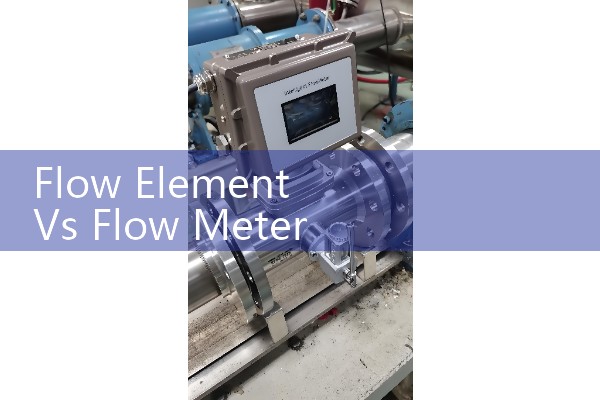
A complete flow meter also reduces wiring mistakes. All internal connections between sensor and electronics are factory made. You do not need to worry about cable length limits, shielding, or ground loops between the element and transmitter. The factory calibrates the whole unit together. Accuracy is verified as a system.
For hazardous areas a complete flow meter with ATEX or IECEx certification is easier to document. One certificate covers the whole instrument. With separate components you need certificates for the element, the transmitter, the cable glands, and the installation drawings. That adds engineering time.
Common Flow Element Types in Industry
Orifice plates remain the most widely used flow element globally. They are simple and predictable. A plate with a precisely machined hole sits between flanges. The pressure drop across the plate is proportional to flow rate. You need a differential pressure transmitter to read that signal. The accuracy is typically 1 to 2 percent of rate with proper installation. Straight run requirements are long. You need 20 to 40 pipe diameters upstream depending on the fitting layout.
Venturi tubes are another primary element. They cost more than orifice plates but produce less permanent pressure loss. A venturi smooths the fluid through a gradual contraction and expansion. This matters on pumping systems where energy cost is significant. A water utility in Australia calculated that switching from orifice plates to venturi tubes on their main raw water line saved enough pump energy to pay back the cost difference in 3 years.
Flow nozzles work well on high velocity steam. They handle erosion better than thin orifice plates. We recommend flow nozzles when steam velocity exceeds 40 m/s. Most power plants use them for main steam flow measurement.
Pitot tubes and averaging pitot tubes like Annubar types measure dynamic pressure. They insert into the line through a valve. The advantage is hot tap installation without shutting down the process. The disadvantage is lower accuracy and sensitivity to flow profile distortion.
Common Flow Meter Types in Industry
Electromagnetic flow meters dominate water and wastewater. They measure conductive liquids from 5 µS/cm upward. No pressure drop. No moving parts. Accuracy of 0.2 to 0.5 percent of rate is standard. Pipe sizes from DN15 to DN2000 are available. Silver Automation Instruments supplies electromagnetic flow meters with rubber, PTFE, or PFA liners depending on chemical compatibility.
Coriolis mass flow meters measure mass directly. No temperature or pressure compensation needed. A food and beverage customer in the Philippines measures chocolate syrup with a Coriolis meter. The viscosity changes with temperature but the mass reading stays accurate. Coriolis meters also give density and temperature as bonus outputs.
Ultrasonic flow meters come in two types. Clamp on models mount outside the pipe. They work well for clean water and clean chemicals. Inline or insertion models handle dirtier fluids and larger pipes. We often supply clamp on ultrasonic meters for building water audits where cutting into the pipe is not acceptable.
Vortex flow meters meter steam, gas, and low viscosity liquids. A bluff body creates vortices downstream. The vortex frequency is proportional to flow velocity. Accuracy is typically 1 percent of rate for liquids and 1.5 percent for gas and steam. Vortex meters need a minimum Reynolds number to work so very low flow rates are a problem.
Oval gear flow meters handle viscous liquids like diesel, heavy oil, and syrup. The oval gears rotate with each fixed volume passing through. Accuracy is 0.2 to 0.5 percent of rate regardless of viscosity. A distributor in Africa sells our oval gear flow meters for diesel generators and fuel transfer skids.
Thermal mass flow meters measure gas flow by heat transfer. They work at low pressures where other meters struggle. Biogas from digesters is a typical application in food processing plants. Accuracy depends on gas composition because different gases have different thermal properties.
Integration Considerations
Your control system cares about the output signal. Most flow meters and flow transmitters offer 4-20 mA HART as standard. Some also include pulse output for totalizing or Modbus for digital communication. Check that the output matches your PLC or DCS input card before ordering.
Power supply is another practical point. Many plants run 24 VDC instrument loops. Some older plants still use 220 VAC powered instruments. Silver Automation Instruments offers both options on most flow meter models. Specify your power supply when requesting a quote.
Calibration traceability matters for custody transfer and billing applications. A flow meter with factory calibration certificate gives you documented accuracy. A bare flow element has『SILVER Official Website SERVICE』