

 Current position > Product detail
『Liquid Oxygen Flow Meter Standards: Cleaned-for-Oxygen Cryogenic Sizing Solutions for Industrial Plants』Related information(clamp on meter|electromagnetic meter|venturi meterrotameter|orifice meter|ultrasonic flow meter|mass flow meter|coriolis mass flow meter|coriolis flow meter|magnetic flow meter|magmeter flow meter|magflow flow meter|mag meter flow meter|electromagnetic flow meter|vortex flow meter|turbine flow meter|thermal mass flow meter|thermal flow meter|rotameter flow meter)
Liquid Oxygen Flow Meter Standards: Cleaned-for-Oxygen Cryogenic Sizing Solutions for Industrial Plants
Quick Answer: Liquid oxygen flow meters need oxygen cleaning, cryogenic temperature materials, and a sizing process that uses actual density, viscosity, pressure, and flow range. Silver Automation Instruments recommends a cleaned-for-oxygen Coriolis mass flow meter for most LOX lines from DN10 to DN150. Send your pressure in bar, temperature in °C, pipe size DN, and flow range in kg/h to get a quote with cleaning certificate and drawings.
Why Oxygen Cleaning Is Not Optional for Liquid Oxygen Service
Liquid oxygen sits at around -183 °C at atmospheric pressure. A small amount of hydrocarbon oil, grease, or a soft seal material on a flow meter can become an ignition source when liquid oxygen hits the meter at high velocity. The result can be a serious fire inside the pipe, not just a failed meter. Here is the thing, cleaned-for-oxygen service is a purchase requirement, not a preference.
We have seen customer sites in Southeast Asia where a standard vortex meter was installed without oxygen cleaning. The meter worked for a few weeks, then the internal seal material swelled at low temperature and plugged the line. A chemical plant in Indonesia lost one batch because the flow transmitter signal became unstable. The issue was traced back to hydrocarbon residue on the sensor body.
Cryogenic Sizing for Liquid Oxygen: Data That Matters
Liquid oxygen density at -183 °C is close to 1141 kg/m3. Viscosity is around 0.19 cP. These values change with pressure and temperature. A flow meter sized for water at 20 °C will not work correctly on a LOX line. You need the minimum and maximum flow, the normal operating pressure, and the backpressure at the receiving tank. This matters because liquid oxygen can flash to gas if the pressure drop across the meter is too large.
Most engineers skip this part on the first quote, but the data gap always comes back during inspection. In practice, we ask for four data points. Pipe size DN, inlet pressure in bar, operating temperature in °C, and mass flow range in kg/h. A customer in Vietnam sent us these values for an air separation plant: DN40 line, 10 bar pressure, -179 °C, 800 kg/h normal flow. We selected a DN25 cleaned-for-oxygen Coriolis meter with a PT100 output and 4-20 mA HART. Pressure drop at 800 kg/h was 0.28 bar, so no flashing margin problem.
Flow Meter Types for Liquid Oxygen
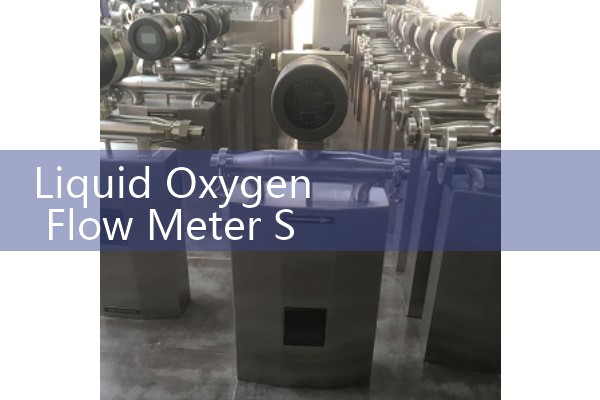
Not every flow meter suits liquid oxygen. A Coriolis mass flow meter is our first choice because it measures mass directly, works at cryogenic temperature, and has no moving parts that rub in the flow stream. We supply Coriolis meters with 316L stainless steel or Hastelloy C-22 wetted parts and oxygen cleaning certificates. The electronics can be remote mounted if the process area stays cold or classified.
Vortex flow meters can work on LOX, but only after oxygen cleaning and with a cryogenic temperature rating. They need a minimum flow velocity and may not handle low turndown as well as a Coriolis. Turbine meters are sometimes used for LOX loading, but the bearings need special cleaning and the customer must plan for maintenance. Ultrasonic clamp-on meters are not reliable on most cryogenic pipes because the acoustic signal changes too much at -183 °C. Thermal mass flow meters do not measure liquid oxygen. We do not recommend them for this service.
Electromagnetic flow meters cannot measure liquid oxygen. The liquid is not conductive enough, so the meter will not produce a stable signal. This is one of the most common questions we get from water and wastewater customers who already use magmeters.
Cleaned-for-Oxygen Standards and What We Deliver
Silver Instruments follows CGA G-4.1 and ASTM G93 methods for oxygen cleaning. We clean wetted parts, inspect them for hydrocarbon residue, and package them in sealed bags with a certificate of cleanliness. The certificate includes batch number, cleaning date, the s
Do not accept a flow meter for LOX service if the supplier cannot provide these documents. But a cheap meter without cleaning records can cause an inspection hold at a new plant. This is common in the Middle East, where EPC contractors require full traceability before sign off.
Materials and Seals for Liquid Oxygen Flow Meters
Wetted parts for liquid oxygen should be 316L stainless steel as a minimum. Some sites use Monel or Hastelloy C-22 for aggressive gas streams, but 316L works for most industrial LOX operations. Soft seals need special attention. PTFE and PCTFE are suitable in many cases. Viton and standard rubber are not suitable because they can harden or crack at cryogenic temperature. Metal C-rings are used where high pressure or high purity is critical.
The meter body should be grounded and bonded. Static charge can build up on nonconductive liners or through long pipe runs. For hazardous areas, we can supply the Coriolis or vortex meter with ATEX Zone 1 or Class I Division 1 approvals depending on the project specification.
Sizing Example for a Liquid Oxygen Line in a Steel Mill
A steel mill in Mexico needed to measure LOX flow to an electric arc furnace. The line was DN50, inlet pressure 16 bar, temperature -176 °C, flow range 1200 kg/h to 9000 kg/h. The customer originally asked for a turbine meter. We reviewed the turndown and pressure drop. A turbine meter would add maintenance risk and the bearing supplier could not provide oxygen cleaning documents for that model.
We supplied a DN40 Coriolis mass flow meter with 316L stainless steel wetted parts, PTFE seals, oxygen cleaning, and remote transmitter. The meter outputs mass flow, volume flow, temperature, and density. The customer used the density signal to confirm the liquid stayed in a single phase. This solved the sizing issue and reduced the number of spare parts compared to a turbine meter.
How to Request a Cleaned-for-Oxygen Cryogenic Sizing Quote
Send Silver Instruments your inlet pressure in bar, operating temperature in °C, pipe size DN, and flow range in kg/h. Also tell us if you need ATEX Zone 1, a local service agent, or a certificate for a specific standard like CGA G-4.1 or ASTM G93. We reply with a data sheet, a dimension drawing, and a price offer within one working day.
You can reach our team at Tel +86-25-68650347, WhatsApp +86-25-52155837, or WeChat +86 15365082610. Ask for a liquid oxygen flow meter proposal from Silver Automation Instruments.
FAQ: Liquid Oxygen Flow Meter Standards and Sizing
1. What does cleaned-for-oxygen mean for a flow meter?
It means the wetted parts were cleaned to remove hydrocarbon oil, grease, and particles that can ignite in oxygen service. The meter is packaged and sealed with a certificate that shows the cleaning standard and date.
2. Can an electromagnetic flow meter measure liquid oxygen?
No. Liquid oxygen has very low conductivity. The flow signal from an electromagnetic meter will be unstable or zero. Use a Coriolis or vortex meter instead.
3. Which flow meter is best for liquid oxygen?
We recommend a cleaned-for-oxygen Coriolis mass flow meter for most industrial liquid oxygen lines. It provides direct mass flow, density, and temperature over a wide turndown range. Vortex is a lower cost option for high stable flows.
4. What data do you need for cryogenic sizing?
Send pipe size DN, inlet pressure in bar, temperature in °C, and flow range in kg/h. If possible, include backpressure and the gas return line pressure. These values help us avoid cavitation and flashing.
5. Do you provide oxygen cleaning documents for project approval?
Yes. We provide a cleaned-for-oxygen certificate, a declaration of oxygen service, and batch traceability documents. We follow CGA G-4.1 and ASTM G93 as standard practice.