

 Current position > News detail
『How Flow Meter Works: Comprehensive Guide to Basic Liquid and Gas Sensors』Related information(clamp on meter|electromagnetic meter|venturi meterrotameter|orifice meter|ultrasonic flow meter|mass flow meter|coriolis mass flow meter|coriolis flow meter|magnetic flow meter|magmeter flow meter|magflow flow meter|mag meter flow meter|electromagnetic flow meter|vortex flow meter|turbine flow meter|thermal mass flow meter|thermal flow meter|rotameter flow meter)
How Flow Meter Works: Comprehensive Guide to Basic Liquid and Gas Sensors
Quick Answer: A flow meter measures the volume, mass, or velocity of a liquid or gas moving through a pipe. The correct sensor depends on fluid type, pipe size, pressure, temperature, and accuracy requirements. Silver Automation Instruments supplies Coriolis, electromagnetic, ultrasonic, vortex, oval gear, and thermal mass flow meters for water, oil, gas, chemical, food, and marine use.
What a Flow Meter Actually Measures
A flow meter converts fluid movement into an electrical signal that operators can read or transmit. For liquids, typical outputs are volume flow in cubic meters per hour, mass flow in kg/h, or velocity in m/s. For gases, flow is often expressed in standard cubic meters per hour or kg/h. The signal can be a pulse, 4-20 mA HART, Modbus RTU, or a local digital display.
In practice, engineers select a flow meter based on fluid properties and the pipe run conditions. A flow meter is not just a sensor. It is the input that control systems use for dosing, batching, custody transfer, inventory tracking, and leak detection.
Liquid Flow Meter Working Principles
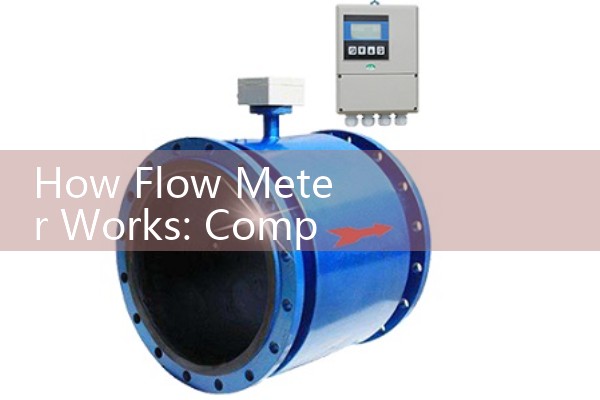
Electromagnetic flow meters only work with conductive liquids. They apply a magnetic field across the pipe and measure the voltage generated by the moving liquid. Minimum conductivity is often 5 µS/cm. This rules out demineralized water and hydrocarbons. But it works well for raw water, wastewater, acids, slurries, and food liquids. A typical model for water and wastewater is the Silver Instruments SIL-MAG electromagnetic flow meter with PTFE or rubber liner, sizes from DN15 to DN1200.
Coriolis mass flow meters measure mass flow directly. They vibrate a tube and detect phase shift caused by fluid inertia. This works for both liquids and gases. Accuracy can reach 0.1 percent of reading. They cost more but handle changing density, temperature, and viscosity. For edible oil, palm oil, molasses, or LPG, a Coriolis meter with 316L stainless steel wetted parts is common.
Ultrasonic flow meters use transit time or Doppler shift to calculate velocity. Transit time meters work on clean liquids and some gases. Doppler meters need particles or bubbles in the flow. Ultrasonic meters do not contact the fluid, so they suit corrosive or hygienic lines. Clamp-on types install outside the pipe, which helps when cutting the pipe is not possible.
Oval gear flow meters are positive displacement meters for clean liquids. They count fixed volumes trapped between two rotating oval gears. This is useful for diesel, lubricating oil, fuel oil, and food oils. Viscosity should be known because high viscosity reduces slip. At low flow rates, oval gear meters remain accurate. Silver Instruments supplies oval gear meters with gears in PPS or stainless steel for fuels and solvents.
Gas Flow Meter Working Principles
Thermal mass flow meters measure heat loss from a heated sensor to the gas stream. More mass flow removes more heat. This gives mass flow directly without pressure and temperature compensation. The meter works for air, natural gas, biogas, nitrogen, and stack gas. It is a good fit for pipe sizes from DN15 to DN200 and for gas pressure up to 40 bar depending on model.
Vortex flow meters detect vortices shed from a bluff body in the pipe. The vortex frequency tracks flow velocity. This works for steam, compressed air, natural gas, and some liquids. It requires a minimum flow velocity to create stable vortices. With a built in pressure and temperature sensor, vortex meters can output mass or energy flow. This is common in steam boiler rooms and compressed air systems.
Coriolis meters can also measure gas mass flow directly. They are not affected by gas composition changes. For high value gas or variable LPG blends, a Coriolis meter gives high accuracy and repeatability.
How to Choose the Right Sensor
Before you ask for a quote, prepare these numbers. Fluid type, pipe size such as DN50, pressure in bar, temperature in °C, minimum and maximum flow
Water and wastewater often use electromagnetic flow meters because the fluid is conductive. Diesel and oils often use oval gear meters because they handle high viscosity and low flow. Steam and compressed air often use vortex meters because they tolerate high temperature and pressure. Natural gas and air often use thermal mass meters because they measure mass flow directly.
Typical Installation and Maintenance Issues
Most flow meters need a stable velocity profile. Electromagnetic and vortex meters usually need a straight pipe length of 10D upstream and 5D downstream. Coriolis meters are less sensitive to swirl but still perform best away from pumps and valves. Oval gear meters require clean fluid. Install a strainer upstream to protect the gears. Thermal mass meters need dry gas. Install them away from condensation points and low spots.
We have seen many customer sites where grounding was the hidden problem for electromagnetic meters. A poor ground connection gives unstable readings. For plastic or lined pipes, use grounding rings or electrodes. Also check for air bubbles in liquid lines. Air bubbles cause false high velocity in ultrasonic meters and noisy signals in electromagnetic meters. In gas lines, water droplets cause errors in vortex and thermal mass meters.
Common Applications in Key Markets
A water utility in Vietnam uses electromagnetic flow meters on raw water intake DN400 for flow tracking. A palm oil refinery in Indonesia uses Coriolis mass flow meters for crude palm oil mass balance. A food grade dairy plant in the Philippines uses oval gear meters for syrup batching. A gas distribution company in Nigeria uses thermal mass flow meters for compressed natural gas dispensing. A desalination plant in the Middle East uses electromagnetic flow meters for seawater feed and brine discharge. For seawater desalination, select an electromagnetic flow meter with titanium electrodes and a PFA liner.
Why Engineers Buy from Silver Automation Instruments
Silver Automation Instruments is a flow meter manufacturer, not a trading company. We assemble and calibrate in China. We ship to Southeast Asia, Oceania, Latin America, Africa, and the Middle East. We supply spare parts and offer factory calibration reports. We respond with actual sizing calculations and product drawings. A typical order ships in 7 to 15 days after drawing approval.
For a fast quote, send us your pressure in bar, temperature in °C, pipe size in DN, and flow range. You can reach us by phone at +86-25-68650347, by WhatsApp at +86-25-52155837, or by WeChat at +86 15365082610.
FAQ
Which flow meter works with seawater in a desalination plant?
An electromagnetic flow meter with titanium electrodes and a PFA liner works well for seawater feed and brine discharge. It handles high salinity and the conductive liquid requirement is met.
Can one flow meter measure both liquid and gas?
Most meters are built for one fluid group. Coriolis meters can measure both liquid and gas mass flow. Vortex meters also handle steam, gas, and liquid, but the sizing must be checked for each fluid.
What information do I need to get a flow meter price?
Send us fluid, pipe size in DN, pressure in bar, temperature in °C, minimum and maximum flow rate, and required output or certification. That lets us select the right model and liner within one working day.
Do I need a straight pipe run for a flow meter?
Yes for most types. Electromagnetic and vortex meters often need 10D upstream and 5D downstream. Coriolis meters are less sensitive, but pump and valve placement still matters.
What is the difference between mass flow and volume flow?
Volume flow changes with temperature and pressure. Mass flow stays the same. Coriolis and thermal mass meters measure mass flow directly. Electromagnetic and oval gear meters measure volume flow.