


 Current position > News detail
『Gpi Water Flow Meter Troubleshooting: Fixing Frozen Totalizers and Cleaning Turbulent Sediment』Related information(clamp on meter|electromagnetic meter|venturi meterrotameter|orifice meter|ultrasonic flow meter|mass flow meter|coriolis mass flow meter|coriolis flow meter|magnetic flow meter|magmeter flow meter|magflow flow meter|mag meter flow meter|electromagnetic flow meter|vortex flow meter|turbine flow meter|thermal mass flow meter|thermal flow meter|rotameter flow meter)

GPI Water Flow Meter Troubleshooting: Fixing Frozen Totalizers and Cleaning Turbulent Sediment
Quick Answer: A frozen totalizer on a GPI water meter usually points to a blocked impeller, a dead battery, or a damaged pickup sensor. Turbulent sediment build-up inside the meter body is often the root cause. Flush the meter with clean water first, remove the rotor assembly, clean the chamber, and check the battery voltage before replacing any electronic part.
We have seen this on customer sites many times. A water treatment plant in Malaysia ran a GPI meter on raw river water. The totalizer stopped at 4,382 m3. The impeller was packed with fine sand and clay. The display still had power but the flow reading stayed flat. Cleaning the chamber and resetting the totalizer fixed the issue in about 40 minutes.
Why a GPI Water Meter Totalizer Freezes
A totalizer freeze can come from three areas. The first area is mechanical. Sediment, sand, iron oxide, or biofilm slows the rotor. The second area is electrical. A weak battery or a failed reed switch sends no pulse. The third area is process-related. Air pockets or very low flow below 0.3 m/s do not spin the rotor enough.
In practice, mechanical blockage is the most common cause for water meters in Southeast Asia and Africa. Raw water contains more silt than municipal water. A DN25 GPI turbine meter with a 50 mesh strainer upstream can still pass fine particles under 300 micron. These fines pack the rotor shaft over time.
Step by Step Reset for a Frozen Totalizer
First, isolate the meter. Close the upstream and downstream valves. Relieve pressure to zero bar. Remove the meter from the pipe. Do not try to reset the totalizer while the process line is live.
Second, open the meter body according to the GPI manual. Pull the rotor assembly out. Inspect the shaft and the bearing. If the shaft shows scoring or the bearing is worn, replace the kit. A new rotor kit costs less than a new meter and solves many repeat failures.
Third, clean the rotor pocket with a soft brush and clean water. Do not use a metal pick. A scratched chamber creates new turbulence and can reduce accuracy by 2 to 5 percent.
Fourth, check the battery voltage with a multimeter. A GPI battery under 2.8 V DC may still light the display but not drive the totalizer pulse reliably. Most engineers skip this part. They replace the battery anyway.
Fifth, reassemble the meter and run a bucket test. Run a known volume of water, for example 20 liters, through the meter. Compare the totalizer reading to the bucket. A deviation over 3 percent means the rotor or the chamber still has a problem.
Turbulent Sediment Build-Up in GPI Flow Meters
Turbulent sediment is not just sand. It includes silt, rust flakes, biological slime, and scale particles. These solids do not settle in a long straight pipe because the flow velocity keeps them bouncing. Inside the meter body, the flow path narrows around the rotor. A low pressure zone forms behind the rotor. Sediment drops out and packs the bearing area.
A customer in Vietnam asked us about a GPI meter on a paint factory cooling water loop. The meter totalizer froze every two weeks. The water had 35 ppm of suspended solids and a pH of 8.2. The root cause was not the meter. The plant used a 40 mm pipe with only 0.8 m/s velocity. We recommended a Silver Instruments electromagnetic flowmeter with DN40, PTFE liner, and 0.5 m/s minimum flow. The replacement eliminated the mechanical rotor failure.
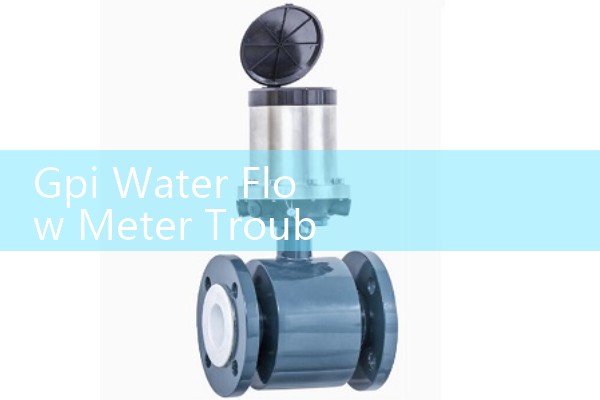
For clean water with low solids, a GPI turbine meter works. For raw water, recycled water, or water with iron bacteria, a full bore electromagnetic flowmeter is a better choice. It has no moving parts. Solids pass straight through.
Cleaning Procedure for Turbulent Sediment
Use a cleaning sequence that removes both organic and mineral foulin
Do not use strong solvents on a GPI plastic meter body. Acetone and toluene can swell nylon or acrylic parts. After the acid soak, brush the rotor gently. Rinse with clean water until the rinse water reads below 20 µS/cm if you have a conductivity meter. Dry the parts with compressed air at 2 bar maximum.
Inspect the O-rings. Replace any O-ring with cuts, flat spots, or compression set. A damaged O-ring lets water enter the electronics housing. That causes a different failure mode: a fogged display and a shorted pickup board.
When to Replace the GPI Meter with a Silver Instruments Model
Sometimes the right fix is not another repair. If the GPI meter faces frequent sediment blockage, a mechanical meter is the wrong tool for the job. Consider a Silver Automation Instruments electromagnetic flowmeter for conductive water. It works with water conductivity above 5 µS/cm. Most tap water, river water, and process water meet this with margin.
Key parameters to specify include pipe size, flow range, pressure, temperature, and output. A standard Silver Instruments electromagnetic flowmeter covers DN15 to DN300, pressure up to 16 bar, temperature up to 150 °C, and outputs 4-20 mA HART plus RS485 Modbus. For hot water, steam condensate, or CIP return lines above 80 °C, add a PT100 element. The PT100 element tracks temperature changes that affect conductivity and density. For hazardous areas, we supply an ATEX Zone 1 version.
For chemical dosing, our oval gear flowmeter handles 0.3 to 200 cP and 0.5 to 1000 kg/h depending on density. For food grade water, we offer a sanitary version with PTFE liner and 316L electrodes. We do not sell GPI spare parts. We supply an alternative when the GPI meter no longer fits the process. Tell us the pipe size and water quality. Our engineers will recommend a meter that does not clog.
FAQ: GPI Water Flow Meter Frozen Totalizer and Turbulent Sediment
Why does my GPI flow meter totalizer stay at zero while the display is on?
The impeller is likely jammed by sediment or the pickup sensor has failed. Remove the rotor and check if it spins freely. If the rotor spins but the totalizer stays at zero, the pickup board or battery is faulty.
Can I clean a GPI water meter without removing it from the pipe?
You can flush the line with clean water at 2 to 3 bar. This removes loose sediment. If the totalizer is still frozen, you must remove the meter and clean the rotor chamber by hand.
What sediment size causes GPI turbine meters to jam?
Particles from 50 to 300 micron often pack the rotor shaft. Larger particles may break the rotor blade. Install a strainer upstream if you use a turbine meter. For water with fine solids, a full bore electromagnetic flowmeter is safer.
Is a frozen totalizer a sign of a failed battery or a failed sensor?
It can be either. Check the battery voltage first. A battery below 2.8 V DC can cause an intermittent pulse. If the battery is good and the rotor spins, the reed switch or Hall sensor is the likely failure.
Should I replace my GPI meter with a Silver Instruments electromagnetic flowmeter?
Yes if the water has sediment, the meter is under DN50, or the totalizer freezes more than twice per year. A Silver Instruments electromagnetic flowmeter has no moving parts and no rotor to clog. Send us your pipe size DN, flow range in m3/h, pressure in bar, and water conductivity in µS/cm. We will send a quote within one business day.
Tel: +86-25-68650347
Whatsapp: +86-25-52155837
WeChat: +86 15365082610