

『Oil Flow Meter Accuracy 1 Percent: Budget-Friendly Monitoring for Internal Reuse Loops』Related information(clamp on meter|electromagnetic meter|venturi meterrotameter|orifice meter|ultrasonic flow meter|mass flow meter|coriolis mass flow meter|coriolis flow meter|magnetic flow meter|magmeter flow meter|magflow flow meter|mag meter flow meter|electromagnetic flow meter|vortex flow meter|turbine flow meter|thermal mass flow meter|thermal flow meter|rotameter flow meter)
Oil Flow Meter Accuracy 1 Percent: Budget-Friendly Monitoring for Internal Reuse Loops
Quick Answer
A 1 percent accuracy oil flow meter is often the sweet spot for internal reuse loops. You get reliable data to track oil consumption and detect leaks without paying for custody transfer precision. Oval gear flow meters from Silver Instruments deliver this exact performance at a price that works for tight operational budgets.
Why 1 Percent Accuracy Makes Sense in Oil Reuse Loops
Most internal oil circuits do not need 0.2 percent or 0.5 percent accuracy. The oil keeps circulating inside your plant. You measure it to spot abnormal losses, schedule filter changes, or balance process streams. A 1 percent meter catches a slow leak of 2 liters per hour across a 200 liter tank within a day. That is fast enough for operators to respond.
Higher accuracy meters cost more. They need tighter upstream straight pipe runs. They can be sensitive to viscosity swings. A 1 percent oval gear meter ignores most of these headaches. It handles viscosity from 1 cP to over 1000 cP with the same stable reading. This covers light hydraulic oils, heavy gear oils, and even some heat transfer fluids.
In our factory testing, we see many customers choose a 1 percent meter after comparing total cost of ownership. A food processor in Indonesia replaced a set of turbine meters with our oval gear type on their fryer oil return line. They saved 40 percent on hardware and got more stable readings when the oil temperature drifted from 60 °C to 120 °C.
What Actually Happens Inside an Internal Reuse Loop
Picture a quenching oil tank in a heat treatment shop. The hot metal parts go in. The oil heats up and flows to a cooling system. Then the cooled oil returns to the tank. This loop runs 18 hours a day. The operator needs to know the flow rate to confirm the cooling pump is working. They also want totalized volume to spot oil loss from drag-out. A flow meter with a 4-20 mA output connected to their PLC gives them both live flow and totalized pulse signals.
Here is the thing. Most engineers skip the complex flow computers and instead wire the pulse output directly to a digital counter. With an oval gear meter, each pulse equals a fixed small volume. If you know one pulse equals 10 mL, counting pulses tells you exactly how much oil went through. This simplicity keeps the installation cheap and the maintenance team happy.
Oval Gear Versus Turbine Meters for Oil Monitoring
Turbine meters like a steady, clean, low-viscosity flow. In reuse loops, oil can get dirty. It picks up fine metal particles. A turbine bearing can wear out fast. Oval gear meters handle particles better because the meshing rotors wipe the chamber. The clearances are large enough for small contaminants. We have seen units still working within 1 percent after three years on unfiltered return oil lines in Vietnam.
Viscosity changes also bother turbine meters. If your oil starts at 10 cP cold and drops to 2 cP hot, a turbine meter may shift its K-factor by 3 or 4 percent. An oval gear meter stays inside its 1 percent spec across that range. The positive displacement principle locks the volume per revolution.
One trade-off is pressure drop. Oval gear meters need some differential pressure to spin. In large lines above DN50, we recommend you check the available pump head. Most pumps in reuse loops have enough spare head because the pipe runs are short. But we always ask for the pump curve to be sure.
How to Specify a Budget-Friendly 1 Percent Oil Flow Meter
You want to keep the quote request simple. We need five pieces of data from you.
Oil type and viscosity at operating temperature. For example, Mobil DTE 25 at 40 °C is about 44 cSt. Flow range in liters per minute or kg per hour. The meter turndown on oval gear is about 10:1 for 1 percent accuracy, so a 2 to 20 L/min range works well. Pipe size DN15, DN25, DN40, or DN50. Process temperature and pressure. Output signal preference, usually 4-20 mA plus a pulse output for totalizing.
Most internal loops operate below 10 bar. Our standard oval gear meters with aluminum body handle up to 40 bar. Higher pressures need a stainless steel body. A standard reed switch pulse output costs less than a Hall effect sensor. If your PLC accepts a passive pulse, you can spend less. We guide you through this on a quick call or WhatsApp chat.
Real Installations That Delivered Quick Payback
A lubricant blending plant in Thailand installed six oval gear meters on their base oil return manifold. They blend different viscosity grades and needed to confirm how much each grade contributes to the recovered oil mix. The meters gave them 1 percent accuracy at a total cost under USD 3000 for all six points. Payback came in four months through reduced waste oil disposal fees.
A metal stamping factory in Mexico asked us for a flow meter on their stamping oil recirculation loop. They had a guess-based maintenance schedule and changed filters too early. After installing our oval gear me
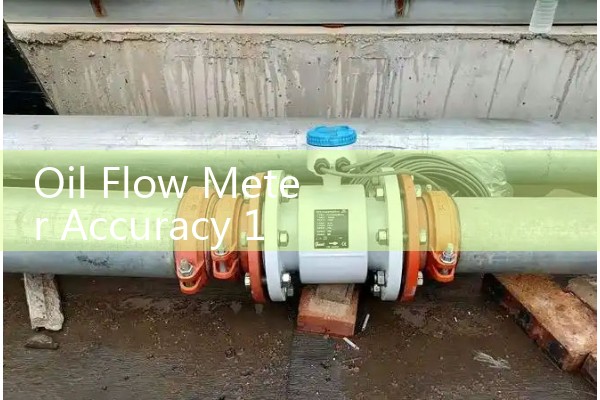
We also see many small heat treatment shops in the Middle East using our meters. They run quench oil at 80 °C and need measurement for ISO 9001 process control records. A 1 percent meter with a mechanical totalizer gives them auditable numbers without any electrical wiring. Simple, robust, and accepted by auditors.
Output Signals and Connectivity for Your Monitoring System
Silver Instruments oval gear flow meters for oil come with several output options. The most common budget setup is a reed switch pulse output plus a 4-20 mA current loop. The pulse feeds a counter or a PLC high-speed input. The 4-20 mA gives instantaneous flow rate. You get both without buying two meters.
For older plants with no PLC, we offer a mechanical register totalizer. It is a rolling digit counter driven directly by the meter gears. It never loses data during a power outage. Many customers love this because it just works and needs no calibration except the meter itself.
We can also supply meters with HART protocol on the 4-20 mA signal. This lets you read flow rate, total, and diagnostic flags over the same two wires. It costs a bit more but saves wiring when you need remote diagnostic access. Ask our engineers to configure the HART variables to show the parameters your DCS needs.
Materials and Compatibility With Different Oil Types
Standard oil flow meters use an aluminum body with PPS rotors and FKM O-rings. This combination handles most mineral oils, synthetic oils, and some water-glycol fluids. For esters or phosphate ester fluids, we switch to stainless steel bodies and PTFE or EPDM seals. Always tell us the exact fluid because some additives attack FKM seals.
Temperature range is another key point. Aluminum body meters go up to 80 °C continuous. Stainless steel can reach 120 °C. If your oil loop runs hotter, we add a high-temperature bearing option. One cement plant in Morocco runs a gearbox oil circulation loop at 105 °C. Our stainless meter with high-temp bearings has been stable for over a year at 1 percent accuracy.
For internal reuse loops, NPT or BSP threads are typical up to DN50. Flanged connections start at DN25. We stock both thread and flange options to match your existing pipework. Threaded meters reduce installation cost because you do not need flange gaskets and bolts.
Quick Selection Guide for 1 Percent Oil Flow Meters
DN15 oval gear meter covers 0.5 to 25 L/min. Suitable for small hydraulic power pack return lines. DN25 covers 5 to 100 L/min. The workhorse for most industrial oil loops. DN40 handles 20 to 250 L/min. We often quote this size for heat treatment quench oil systems. DN50 covers 50 to 500 L/min. Used on main return headers.
All these sizes maintain 1 percent of reading accuracy from 10 percent to 100 percent of flow range. Below 10 percent, accuracy gradually decreases but remains useful for leak detection. If your low flow falls below 5 percent, consider a smaller meter or contact us for a dual-meter solution.
Contact Silver Instruments for a Specific Quote
Send us your operating parameters and we will recommend the most budget-friendly 1 percent accuracy oil flow meter for your internal reuse loop. Mention your oil type, viscosity in cSt or cP, flow range in L/min, pipe size DN, process temperature and pressure, and the output signal you need. We reply within 24 hours with a datasheet and price.
Email: [email protected]
Tel: +86-25-68650347
WhatsApp: +86-25-52155837
WeChat: +86 15365082610
You can also browse our full range of oval gear flow meters at flow-meter.com.au. Every meter comes with a factory calibration certificate traceable to national standards. Yes, even the budget 1 percent models.
FAQ
Can a 1 percent accuracy oil flow meter detect small leaks in a closed loop?
Yes. Over several operating hours, the totalized volume difference between the supply and return meters will reveal even small losses. A 1 percent meter can catch a leak that would waste 50 liters per week in a 500 liter system.
Do oval gear meters cause a large pressure drop in viscous oil?
Pressure drop increases with viscosity and flow rate. In a typical reuse loop at 100 cP and flow near the meter mid-range, pressure drop is around 0.2 to 0.4 bar. Our application engineers can calculate the exact drop if you provide your conditions.
What happens if the oil contains air bubbles?
Oval gear meters measure total volume including air. Air bubbles cause over-reading. We recommend installing a simple air eliminator upstream if your return line pulls in air. A small investment keeps your data accurate.
Is 1 percent accuracy enough for ISO 50001 energy management?
For internal monitoring and ene
 Hot Blog
 Related AD