

『How Does a Paddle Wheel Flow Meter Work: Digital Pulse Signal Frequency』Related information(clamp on meter|electromagnetic meter|venturi meterrotameter|orifice meter|ultrasonic flow meter|mass flow meter|coriolis mass flow meter|coriolis flow meter|magnetic flow meter|magmeter flow meter|magflow flow meter|mag meter flow meter|electromagnetic flow meter|vortex flow meter|turbine flow meter|thermal mass flow meter|thermal flow meter|rotameter flow meter)
How Does a Paddle Wheel Flow Meter Work: Digital Pulse Signal Frequency
Quick Answer: A paddle wheel flow meter measures low viscosity liquid flow with a rotating paddle rotor. Each paddle passes a sensor and sends one digital pulse. The pulse frequency in Hz is proportional to flow velocity, so a PLC or flow totalizer can convert that frequency into flow rate.
Silver Automation Instruments supplies inline and insertion paddle wheel flow meters for water, wastewater, cooling water, and chemical dosing. Most customers in Southeast Asia, Oceania, Latin America, Africa, and the Middle East use these meters on DN15 to DN200 lines. The working principle is simple, but the digital pulse output is where the real value is.
How the Digital Pulse Signal Is Generated
A paddle wheel flow meter has a rotor fitted with small paddles or blades. Liquid pushes the paddles when it moves through the pipe. A small magnet sits inside each paddle tip or inside the rotor hub. A Hall effect sensor or reed switch sits in the electronics housing outside the flow path. Each time a magnet passes the sensor, the sensor closes a circuit and sends one pulse.
The pulse frequency follows the rotor speed. Rotor speed follows flow velocity. That means a higher flow rate produces a higher frequency. For example, a DN25 inline paddle wheel meter may generate about 40 pulses per litre. At 60 L/min the output is around 40 Hz. At 120 L/min the output is around 80 Hz. This linear relationship keeps calibration straightforward.
Why Digital Pulse Frequency Works Well for Automation
Digital pulse signals are easy to read with PLCs, flow computers, and batch controllers. You do not need a 4-20 mA analog loop for basic totalizing. Many local water treatment panels in Indonesia and Vietnam already have pulse input terminals. The installer connects two wires and sets the K factor in the display or PLC. The K factor is the number of pulses per litre or per gallon. This value changes with pipe size and paddle design.
Silver Instruments offers pulse output as standard on most paddle wheel flow meters. We also supply 4-20 mA HART and RS485 Modbus versions for customers who need remote monitoring. Field technicians in Nigeria and Saudi Arabia often request pulse plus 4-20 mA on the same meter. The pulse goes to a local totalizer. The 4-20 mA goes to a SCADA or DCS input.
Installation Details That Affect Pulse Accuracy
Paddle wheel flow meters need straight pipe before and after the sensor. A common guideline is 10 diameters upstream and 5 diameters downstream. This reduces swirl and uneven velocity profile. Avoid installing the meter right after a pump, elbow, or partially open valve. We have seen customer sites in the Philippines where pump vibration caused unstable pulse readings. Relocating the meter 15 pipe diameters downstream solved the problem.
Insertion paddle wheel meters can be used on larger pipes, normally DN50 to DN300 or bigger. Inline paddle wheel meters fit smaller lines, typically DN15 to DN50. For pipe sizes above DN200, check the insertion probe length and hot tap options. Most inline bodies are made of PVC, PP, PVDF, or 316 stainless steel. Sensor temperature limits are usually 70 °C for standard models and 90 °C for PVDF or stainless versions. Pressure limits are often 10 bar, with 16 bar available on metal bodies.
Typical Applications on Customer S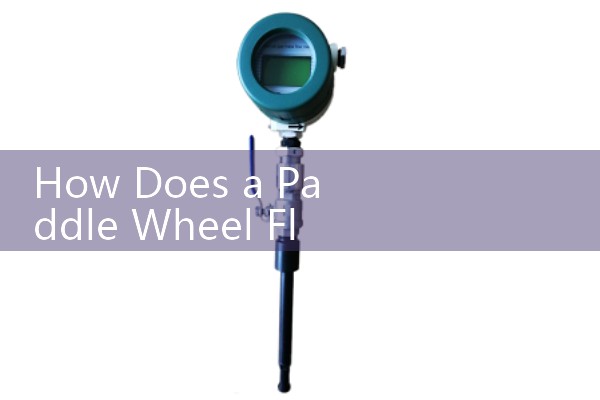
Cooling tower water is the most common application in Southeast Asia. A semiconductor plant in Malaysia uses DN50 paddle wheel meters with pulse output on cooling loops. They track daily makeup water volume and detect excess bleed. A water treatment contractor in Australia uses paddle wheel meters on reverse osmosis skids. They monitor permeate flow on DN25 and DN40 lines.
Other applications include chemical dosing with thin acids, food and beverage washdown water, aquaculture inlet flow, and marine engine cooling water. Paddle wheel meters are not a good fit for viscous fluids above about 50 cP. Liquids with particles larger than 0.5 mm can damage the rotor or jam the paddle. Gas bubbles also cause false high readings because the paddles spin in the gas pocket.
How to Specify a Paddle Wheel Flow Meter
You need five details before you request a price. Pipe size in DN, flow range in m3/h or L/min, liquid type, temperature in °C, and pressure in bar. Also tell us which output you need. Pulse frequency is common, but 4-20 mA HART and RS485 Modbus are available. For hazardous area installations, ATEX Zone 1 certified versions are also available on request. Silver Automation Instruments can pre-set the K factor if you provide the calibration data from the data sheet.
Send us your pressure in bar, temperature in °C, pipe size in DN, and flow range. Our engineers will recommend a plastic or metal body and the correct insertion length. Call Tel: +86-25-68650347 or message Whatsapp: +86-25-52155837 or WeChat: +86 15365082610. You can also visit flow-meter.com.au for full technical data.
FAQ
Q1. What does the digital pulse frequency represent?
It represents the number of paddle rotations passing the sensor per unit time. Each pulse equals one paddle pass. A PLC or display converts the frequency to flow rate using the K factor.
Q2. Can a paddle wheel flow meter measure viscous liquid?
In practice, these meters work best below 50 cP. Thin oils, water, and low viscosity chemicals are fine. High viscosity makes the rotor lag behind the actual flow, so the pulse frequency underreports the true rate.
Q3. What is a typical K factor for a DN25 meter?
A DN25 inline paddle wheel meter often has a K factor between 30 and 60 pulses per litre. The exact value depends on the rotor design and pipe ID. Always use the value printed on the calibration certificate.
Q4. Why do I need straight pipe before a paddle wheel flow meter?
Swirl from pumps and elbows changes the local velocity near the pipe wall. The paddle sits at a fixed point, so distorted flow causes unstable frequency output. Straight pipe helps the velocity profile return to normal.
Q5. Can I use a paddle wheel flow meter for seawater or desalination feed?
Yes in many cases, but select PVDF or stainless body and rotor materials. Seawater with high solids or barnacle growth may jam the rotor. For high volume seawater lines, an electromagnetic flow meter may be a better choice.
If you need a paddle wheel flow meter with pulse frequency output for water, cooling water, or thin chemicals, send your pipe size and flow range. Silver Automation Instruments will reply with a model and price within one business day. Tel: +86-25-68650347, Whatsapp: +86-25-52155837, WeChat: +86 15365082610.
 Hot Blog
 Related AD