

『How to Read a Flow Meter Ball: Gas Regulator Indicator Alignment Metrics Decoded』Related information(clamp on meter|electromagnetic meter|venturi meterrotameter|orifice meter|ultrasonic flow meter|mass flow meter|coriolis mass flow meter|coriolis flow meter|magnetic flow meter|magmeter flow meter|magflow flow meter|mag meter flow meter|electromagnetic flow meter|vortex flow meter|turbine flow meter|thermal mass flow meter|thermal flow meter|rotameter flow meter)
How to Read a Flow Meter Ball: Gas Regulator Indicator Alignment Metrics Decoded
Quick Answer: The ball position in a gas flow meter shows flow rate only when the tube is vertical, the float is clean, and the regulator outlet pressure is stable. Read the center of the ball, not the top edge. Align the scale zero point with the resting ball position before you trust any reading.
This guide covers variable area flow meters, often called rotameters, with ball floats. We focus on gas service because a gas flow meter ball does not behave like a liquid float. In practice, most engineers skip this part. Silver Automation Instruments supplies flow meters to water plants, a paint manufacturer in Vietnam, gas blending panels in Indonesia, food packaging lines in Thailand, and nitrogen generators in Australia. The issues below come from real customer calls.
What You Are Actually Reading on a Flow Meter Ball
Here is the thing: a gas flow meter ball sits inside a tapered tube. Gas enters the bottom. The ball rises until the area between the ball and the tube wall creates enough force to balance the ball weight. The ball does not measure mass flow. It indicates a volumetric flow at a specific gas density. The reading point is the center of the ball or the widest part of the ball, depending on the scale type. Many operators read the top edge and get a flow rate that is 10 to 20 percent high. We have seen this on a nitrogen blanketing line in Indonesia where the operator reported 15 L/min. The real flow was 12 L/min.
In variable area flow meters, the tube taper is fixed. The ball position is linear with flow only if the gas density and viscosity stay within the design range. For air, nitrogen, argon, and biogas this is simple. For mixed gas, you need a correction factor. Silver Automation Instruments can help you calculate that. Send us your gas composition, pressure in bar, temperature in °C, and pipe size in DN.
Gas Regulator Indicator Alignment: What It Means
Gas regulator indicator alignment means matching the flow meter scale zero mark to the resting position of the ball. On small purge rotameters, the zero mark may not sit exactly at the bottom stop. The ball often rests slightly above the stop due to gas leakage or regulator creep. If you install the flow meter after a gas regulator, set the regulator to normal working pressure, block the outlet, and check the ball position. Adjust the scale or the indicator guard so the zero line sits at the ball center.
Why does this matter? A customer in Thailand had a gas blending panel for food packaging. The flow meter ball showed 2 L/min at idle. The operator assumed no flow because the needle valve was closed. The real issue was a damaged regulator seat allowing gas to seep through. The ball position exposed the leak. After we aligned the indicator and replaced the regulator seat, the zero reading was stable.
Step by Step: How to Read the Ball Position Correctly
Step 1. Mount the flow meter vertically. A tilted tube changes the ball travel path and adds friction. Even a 5 degree tilt can shift the reading by more than 8 percent on small DN15 and DN25 gas rotameters.
Step 2. Set the gas regulator to the operating pressure. If your flow meter was calibrated for 1 bar and you operate at 3 bar, the scale is wrong. Gas density changes with pressure. The ball will read higher at higher pressure for the same mass flow. Correct the reading or order a flow meter calibrated for the actual pressure.
Step 3. Read the ball center. For a ball float, read at the widest point. For a cylindrical float, read at the top edge per the manual. Most gas flow meter scales are marked for ball center.
Step 4. Record the upstream temperature. A change from 20 °C to 45 °C affects gas volume. For critical processes, switch to a thermal mass flow meter with temperature compensation.
Step 5. Repeat the measurement three times. Open the valve slowly. Wait for the ball to stabilize. Gas pulses from a regulator can make the ball bounce. Take the average.
Common Errors We 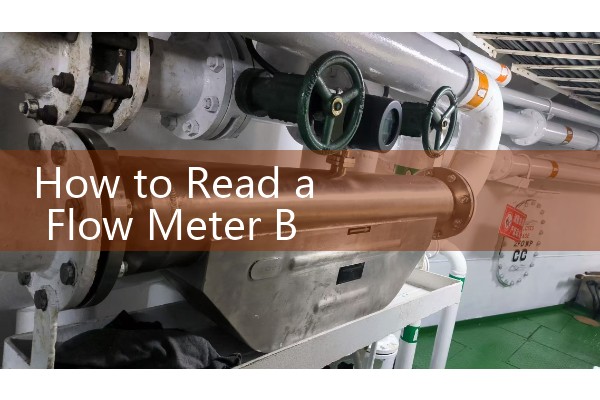
The most common error is reading a gas flow meter ball through a dirty or scratched tube. A small scratch can look like a float edge. Clean the tube with mild soap and water. Do not use solvents on acrylic tubes.
Another error is using a flow meter ball designed for air on propane or CO2. Gas density changes the float height. A flow meter calibrated for air will not read correctly on CO2 at the same pressure. Silver Automation Instruments supplies gas-specific scales for nitrogen, argon, CO2, and biogas.
Do not install the flow meter downstream of a valve that creates turbulence. The ball will flutter. Give the flow meter 10 pipe diameters of straight run upstream and 5 diameters downstream on gas lines. The same problem appeared on a chlorine gas dosing skid in the Philippines. The ball bounced so much the operator could not read within 20 percent. Moving the flow meter solved it.
Gas Flow Meter Ball or Digital Gas Flow Meter?
Flow meter balls are cheap and simple. They work well for purge gas, blanketing, and leak testing. But when you need 4-20 mA output, HART, totalization, or ATEX Zone 1 certification, a thermal mass flow meter or Coriolis meter is better. Silver Automation Instruments supplies both. A ball flow meter gives you a local visual reading. A digital gas flow meter gives you data logging, alarms, and remote monitoring.
Because many gas users start with a rotameter and later need a 4-20 mA signal, we often add a thermal mass flow meter in parallel. The rotameter stays as a local indicator. The thermal meter sends the signal to the PLC. This setup is common on nitrogen generators in Australia and biogas upgrading plants in Malaysia.
Silver Automation Instruments Gas Flow Meter Recommendations
For air, nitrogen, argon, and CO2 purge applications from 0.5 L/min to 100 L/min, the Silver Instruments RT-15 glass tube rotameter with a 316L ball and gas scale works well. It has DN15 connections and a needle valve at the inlet. For flows above 100 L/min up to 1000 L/min, use the Silver Instruments MT-25 metal tube variable area flow meter with a 4-20 mA transmitter option.
For methane, biogas, or mixed gas with pressure above 2 bar, we recommend the Silver Instruments TMF-25 thermal mass flow meter. It reads mass flow directly. It does not need density correction. For high accuracy gas flow from 0.1 percent to 0.5 percent of rate, the Silver Instruments CFS-15 Coriolis mass flow meter is a better fit.
Send us your pressure (bar), temperature (°C), pipe size (DN), and flow range. We will recommend a flow meter ball or digital gas flow meter with a quote. Contact Silver Automation Instruments. Tel: +86-25-68650347. Whatsapp: +86-25-52155837. WeChat: +86 15365082610. Website: flow-meter.com.au.
FAQ: Gas Flow Meter Ball Reading
Q1. Why does the ball bounce during gas flow measurement?
Gas pulsation from the regulator or compressor causes ball bounce. Use a needle valve downstream to dampen the flow. For severe pulses, switch to a thermal mass flow meter.
Q2. Should I read the top or center of the ball?
For ball floats, read the center. For cylindrical metal floats, read the top edge. Check the scale marking on your tube. Many gas rotameters print the reference point on the scale plate.
Q3. Does gas pressure affect a flow meter ball reading?
Yes. Higher gas pressure means higher gas density. The same volumetric flow delivers more mass flow. Always state the operating pressure when ordering a gas flow meter.
Q4. Can I use an air flow meter ball for natural gas?
Not directly. The scale must be corrected for gas density and viscosity. We supply gas-specific scales for natural gas, CO2, nitrogen, and argon.
Q5. How do I align the indicator on a gas flow meter?
Set the regulator to normal pressure. Close the outlet. Let the ball rest. Slide or rotate the scale so the zero mark lines up with the ball center. Tighten the guard. This takes less than one minute on most DN15 and DN25 rotameters.
 Hot Blog
 Related AD