

『Ultimate Guide To Choosing The Best Clamp On Meter For Non-Invasive Measurement』Related information(clamp on meter|electromagnetic meter|venturi meterrotameter|orifice meter|ultrasonic flow meter|mass flow meter|coriolis mass flow meter|coriolis flow meter|magnetic flow meter|magmeter flow meter|magflow flow meter|mag meter flow meter|electromagnetic flow meter|vortex flow meter|turbine flow meter|thermal mass flow meter|thermal flow meter|rotameter flow meter)
Ultimate Guide to Choosing the Best Clamp-On Meter for Non-Invasive Measurement
Quick Answer
A clamp-on ultrasonic flow meter is the most practical non-invasive tool for measuring liquid flow when you cannot or do not want to cut the pipe. Silver Instruments supplies transit-time clamp-on meters that work from DN15 up to DN3000, handle pipe materials like steel, PVC, and HDPE, and deliver an accuracy of ±1.0 % of reading under good conditions. Send us your pipe outer diameter, wall thickness, fluid type, and temperature range for a specific model and price.
What a Non-Invasive Clamp-On Meter Actually Does
Non-invasive measurement means you mount the sensors on the outside of the pipe wall. The pipe remains intact. No flanges, no hot work permit, and no process shutdown. The technology relies on ultrasonic transit-time signals that cross the liquid diagonally. One transducer sends a pulse. The other receives it. The meter calculates flow velocity from the time difference. Multiply velocity by pipe cross-section area and you get volumetric flow rate in m³ per hour, litres per minute, or gallons per day.
We ship most clamp-on meters with 4-20 mA HART output and RS485 Modbus RTU. Engineers in water treatment plants often add a PT100 input for temperature compensation. This matters because sound speed in water shifts with temperature. At 4 °C it is one value. At 85 °C it is another. Without compensation the error creeps up.
Why Engineers in Water, HVAC, and Food Plants Prefer Clamp-On Meters
A maintenance manager at a dairy factory in New Zealand told us they cannot weld a new spool piece into a CIP return line during a production month. A clamp-on meter solved that in two hours. No CIP interruption. A crude oil pipeline operator in Nigeria needed flow data on a 20-inch line. They had no isolation valve nearby. A clamp-on meter went on the pipe on a Tuesday afternoon. By Wednesday morning the SCADA system was reading barrel-per-day figures via Modbus.
In desalination plants across Saudi Arabia and Oman, engineers monitor brine reject lines with clamp-on meters. The fluids are corrosive. The pipe material is often GRP or rubber-lined steel. Insertion probes would create a leak path. Clamp-on sensors just strap on the outside. They last years.
Here is the thing. Most engineers skip the intrusive meter option once they realise a clamp-on kit costs less than the total expense of cutting, welding, radiography, and recertifying a pressure-rated pipe. The installed cost difference can be 3 to 5 times in favour of clamp-on on large diameters.
Four Parameters You Must Confirm Before Selecting a Model
Pipe outer diameter and wall thickness are not suggestions. They are mandatory. We have seen a water distribution company in Indonesia order twelve clamp-on meters with the wrong wall thickness. They had standardised on Sch 40 but the actual pipe was Sch 80. The ultrasonic signal path length changed. The meter read low by 12 percent. We exchanged the sensors after our support team reviewed the photos.
Pipe material matters because sound speed differs in carbon steel, stainless steel 316L, PVC-U, and ductile iron. A transit-time meter programmed for steel will not work correctly on a PN16 PE100 polyethylene pipe without the correct material grouping. Silver Instruments on-site commissioning kits include a thickness gauge and a sound velocity verification step.
Fluid type sets the acoustic impedance. Clean water with low aeration is ideal. Slurries with high solid content can attenuate the signal. In practice, a clamp-on meter works on raw sewage screened to remove rags but may fail on a heavy mining slurry above 5 percent solids. A paper mill in Brazil measured white water with suspended fibres and achieved stable readings by selecting a lower-frequency 0.5 MHz transducer set. Most clean-water applications use 1 MHz or 2 MHz.
Temperature range of the pipe surface and fluid. Standard transducers handle -40 °C to 120 °C. For steam condensate returns at 160 °C we supply high-temperature transducers with heat-resistant coupling gel. The coupling between sensor face and pipe must stay intact. A dry coupling pad can fail in two weeks on a hot pipe.
Installation That Does Not Need a Shutdown
Clamp-on meters strap to horizontal or vertical
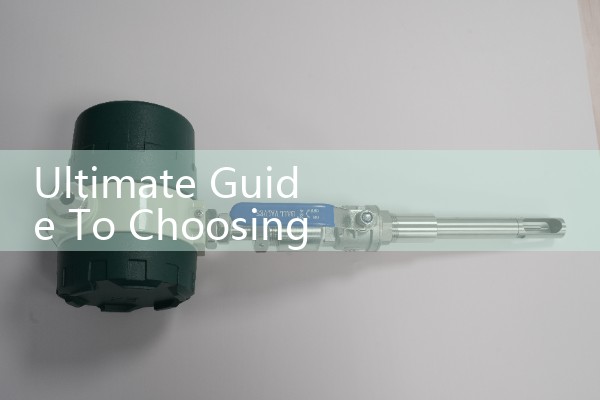
The user applies acoustic coupling paste to the transducer face. Then fastens it with stainless steel straps or magnetic fixtures. After the meter is wired to 24 V DC and the analog output the flow reading appears in real time. Zero cutting, zero welding, zero process isolation. A team of two technicians can complete the job in under four hours on a clean pipe surface.
We ship every Silver Instruments clamp-on meter with a printed installation ruler and a coupling gel bottle. The quick-start guide uses photos, not just text, because the engineers on site in Vietnam or Argentina may not read English comfortably.
Typical Accuracy and When It Counts
Under factory-specified conditions field accuracy reaches ±1.0 percent of reading for flow velocities above 0.3 metre per second. Below 0.2 m per s the uncertainty rises. In custody transfer applications we do not recommend clamp-on unless the installation is paired with a high-accuracy inline meter for verification. For process control, tank filling, or pump efficiency monitoring a clamp-on meter delivers more than enough repeatability.
A chemical distributor in Thailand uses Silver Instruments clamp-on meters to track sodium hypochlorite dosing into a 600 mm main. They accept a ±2 percent error but need the measurement to never stop. The meter has run for 18 months without a single fault.
How Much a Clamp-On Meter Costs
A complete kit with transmitter, transducers, cables, coupling gel, and calibration certificate starts at around USD 900 for a DN15 to DN50 portable unit. Fixed installation meters for DN100 to DN400 pipes range from USD 1,500 to USD 3,200 depending on output options and hazardous area certification. ATEX Zone 1 and IECEx models with intrinsically safe transducers cost USD 4,200 and upward.
Do not compare only the sensor price. Add the avoided pipe work cost, production downtime, and safety paperwork. In crude oil crude transfer stations the payback is often under six months.
FAQ About Clamp-On Meters
Can a clamp-on meter measure gas flow?
No. Ultrasonic transit-time clamp-on meters are designed for clean to slightly dirty liquids with Reynolds number above 4,000. Gas flow requires a different meter, normally an insertion or inline device with specialised transducers because the acoustic impedance mismatch between gas and pipe wall is too large.
What pipe materials are compatible?
Carbon steel, stainless steel, cast iron, ductile iron, PVC, HDPE, PVDF, copper, and glass-reinforced plastic all work when the pipe wall transmits ultrasound. Concrete-lined or heavily corroded pipes with internal scaling usually block the signal. A site survey with a thickness gauge helps.
Do I need to shut down the process?
No. The entire installation happens on the outside. No welding, no drilling. The pipe stays pressurised and operational.
How do I order the right model?
Send Silver Instruments your pipe outer diameter, wall thickness, material, fluid type, and maximum temperature. We will propose a transducer frequency and transmitter configuration. Request a formal quotation with lead time by emailing field details to [email protected]
Can one clamp-on meter handle multiple pipe sizes?
Yes, portable clamp-on meters come with a pair of transducers that cover a range like DN25 to DN300. For permanent installations we size the transducers to the specific pipe to optimise signal strength and accuracy. A fixed transducer tuned for DN100 will not give correct results on DN150.
If you already know the pipe size, fluid, and temperature, email us those three numbers. We will return a model number, tech sheet, and pricing the same business day. For wastewater, desalination, chemical dosing, or HVAC chilled water circuits, a clamp-on meter from Silver Instruments gets you a reading without a single weld. That is the point of non-invasive measurement.
 Hot Product
 Related AD