

『Industrial Air Flow Meter Selection for High-Volume Ventilation Exhaust』Related information(clamp on meter|electromagnetic meter|venturi meterrotameter|orifice meter|ultrasonic flow meter|mass flow meter|coriolis mass flow meter|coriolis flow meter|magnetic flow meter|magmeter flow meter|magflow flow meter|mag meter flow meter|electromagnetic flow meter|vortex flow meter|turbine flow meter|thermal mass flow meter|thermal flow meter|rotameter flow meter)

Industrial Air Flow Meter Selection for High-Volume Ventilation Exhaust
Quick Answer
For high-volume ventilation exhaust ducts above DN200, thermal mass flow meters and insertion vortex meters give you the best balance of cost, accuracy, and easy installation. Avoid inline devices with small internal bores because they cause permanent pressure loss in large pipes. Give us your pipe diameter, normal and maximum air velocity, temperature, and any Zone 1 or Zone 2 classification and we will return a recommendation with real prices within one working day.
What “High-Volume Exhaust” Really Means on Site
In practice, high-volume ventilation exhaust covers air flows from 5,000 m³/h up to 120,000 m³/h in ducts from DN250 to DN1200. We see this in paint booth extraction in Thailand, tunnel ventilation in Colombia, chemical fume hood banks in Saudi Arabia, and grain dryer exhaust in Nigeria. The air is often wet, sometimes carries a light dust load, and can swing from 20 °C to 80 °C in minutes. Most engineers skip the idea of a full-bore inline meter. Cutting a DN600 duct to insert a wafer-style meter costs too much downtime, and the permanent pressure drop wastes fan power.
Instead, the standard field solution is hot-tap insertion. You weld a 1½-inch or 2-inch ball valve assembly onto the duct, insert the probe under pressure, and measure the velocity at one or multiple points. Because you only need to measure air flow for process control or emissions reporting, not for custody transfer, insertion meters are the pragmatic choice.
Thermal Mass Flow Meters for Direct Mass Flow
Most ventilation exhaust measurements care about mass flow, not just volumetric flow, because air density changes with temperature and humidity. A thermal mass meter gives you kg/h or Nm³/h directly without extra temperature and pressure compensation. The insertion probe uses two PT100 elements, one heated and one reference. The cooling effect of the flowing gas gives you mass velocity. Silver Automation Instruments supplies insertion thermal mass flow meters with 4-20 mA HART output, suitable for duct sizes from DN80 to DN1500. Customers in UAE choose this for diesel generator room ventilation exhaust and report less than ±1.5% reading error after field calibration.
One thing to watch: condensation. If your exhaust air has dew point crossing inside the duct, water droplets hitting the heated sensor can spike the reading. A simple drip shield on the probe and mounting the insertion point on the side of the duct, not the bottom, solves most issues. For very wet exhaust like sludge drying halls, we pair the thermal meter with a sintered filter cap and recommend cleaning every three months.
Insertion Vortex Meters When Dust Loading Is High
The story changes when the exhaust stream carries moderate dust, fibers, or sticky paint overspray. Thermal dispersion sensors can foul. Here, an insertion vortex flow meter with a bluff body probe works better. It has no heated elements, just a piezoelectric sensor that counts vortex shedding frequency behind a flat bar. The output is volumetric flow at actual conditions. You multiply by air density from a separate temperature and pressure transmitter if you need mass flow.
We learned from a paint manufacturer in Vietnam that a DN800 exhaust duct from a spray booth reached 45,000 m³/h. They installed a Silver Instruments insertion vortex probe with 316L stainless steel body and a PTFE-coated shedding bar. After one year, the bar needed a quick wipe but the sensor never failed. Their maintenance team checks it during planned shutdowns only. For environments classified ATEX Zone 2 or NEC Class I Division 2, the probe comes with intrinsically safe certification and connects to an IS barrier in the control panel.
Why DP Devices Like Pitot Tubes Fall Short
Averaging Pitot tubes cost little, but in large ventilation ducts the differential pressure at normal velocities around 8-12 m/s is tiny, often below 25 Pa. That is less than 0.1
Actual Measurement Point Location Matters
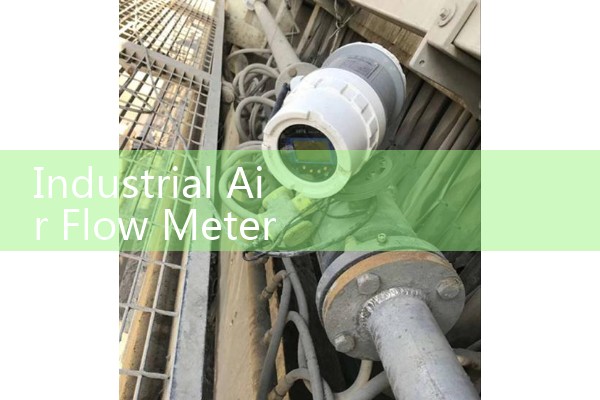
No matter which flow meter you choose, the insertion point location on the duct decides whether readings make sense. Look for at least 10 diameters of straight run upstream and 5 diameters downstream. For a DN600 duct, that is 6 meters of straight pipe before the probe. If you have bends, dampers, or a Y-branch nearby, you need a flow conditioner or you need to profile the velocity and correct for asymmetry. Our application engineers can review a photo of your duct layout and the straight pipe length and tell you if single-point insertion is acceptable or if a multipoint averaging thermal probe is required.
Output and Integration into a Small Plant DCS
Most small to mid-size plants in the Middle East and Africa still use a basic PLC or a simple paperless recorder with 4-20 mA inputs. The flow meter does not need Profibus or Foundation Fieldbus if your panel accepts analog inputs. Silver Instruments flow meters come standard with 4-20 mA HART, RS485 Modbus RTU, and two independently setable pulse or alarm outputs. A wastewater treatment plant in Peru specified our thermal mass flow meter with Modbus RTU for their digester gas vent line because they wanted to poll data directly to a SCADA system without extra I/O modules.
Price Logic and How to Get a Firm Quote
Insertion thermal mass meters with 4-20 mA HART, local display, and probe in 316L stainless steel typically cost between $1,800 and $3,500 ex-works depending on pipe size and mounting type. Retractable hot-tap insertion assembly with ball valve adds $400-700. The vortex insertion version is often 15-20% lower in price. Because the duct size and process conditions change the price significantly, we never give list prices without seeing your parameters first.
Send us your pressure (bar), temperature (°C), pipe size (DN), and flow range to [email protected] or message us on WhatsApp: +86-25-52155837. Mention your country and whether the area has any zone classification. We will reply with a formal quotation that includes shipping to Lagos, Dubai, Surabaya, Manaus, or your local port.
FAQ
Can I install an insertion flow meter on a rectangular duct? Yes. Rectangular ducts require a longer insertion length and sometimes a support bracket on the opposite side when the width exceeds 1200 mm. Provide cross-section dimensions and we calculate insertion depth.
What is the minimum straight run for an insertion thermal meter? 10D upstream and 5D downstream is standard. If you have less than 6D upstream, we can supply a multipoint probe averaging velocity across the cross-section.
Is hot-tap installation possible while the fan is running? Yes, with a retractor assembly and a locking ball valve you can insert and retract the probe under a small positive pressure, typically up to 0.5 bar. For higher pressures, consult our team first.
Do your meters work for biogas or mixed gas ventilation exhaust? Thermal mass meters are sensitive to gas composition changes. If the gas mixture varies, we recommend an insertion vortex meter with correction factors programmed into the transmitter.
How long does delivery take to the Middle East? Most insertion meters ship within 5-7 working days from Nanjing. Sea freight to Jebel Ali or Dammam takes roughly 18-25 days. Air freight is available and takes 4-6 days for urgent projects.
For a same-day technical review, call +86-25-68650347 or chat on WeChat: +86 15365082610. Visit our main site for more industry solutions: flow-meter.com.au.
 Hot Product
 Related AD