

『Clamp On Liquid Flow Meter: Ultrasonic Non-Invasive Pipe Tests』Related information(clamp on meter|electromagnetic meter|venturi meterrotameter|orifice meter|ultrasonic flow meter|mass flow meter|coriolis mass flow meter|coriolis flow meter|magnetic flow meter|magmeter flow meter|magflow flow meter|mag meter flow meter|electromagnetic flow meter|vortex flow meter|turbine flow meter|thermal mass flow meter|thermal flow meter|rotameter flow meter)
Quick Answer
Clamp-on ultrasonic flow meters let you measure liquid flow from outside the pipe. No cutting, no welding, no process shutdown. You simply strap the sensors onto a clean pipe section and get a reading in minutes. For field checks, pump audits, or temporary water balance tests, this is the fastest method we use at Silver Instruments customer sites across Southeast Asia and the Middle East.
What Happens During a Real Clamp-On Ultrasonic Pipe Test
Most engineers skip the theory and go straight to the test. Here is the thing. You show up with a portable kit, a tube of coupling gel, and a pipe measuring tape. You pick a straight pipe run, usually 10D upstream and 5D downstream from any elbow or valve. You clean the pipe surface with a wire brush. Even a thin layer of rust or old paint can kill the signal. We learned this the hard way on a 6-inch carbon steel pipe at a paint factory in Thailand.
The sensor is clamped on with a stainless steel strap or a magnetic holder. The meter fires a pulse of sound across the pipe wall into the liquid. The basic idea: sound travels faster with the flow than against it. The meter measures transit time difference and calculates flow velocity. Multiply by pipe cross-sectional area, and you get volumetric flow in m³/h or liters per second.
Pipe Material and Wall Thickness Matter More Than Size
A common mistake is thinking a clamp-on meter works on any pipe. It does not. Metal pipes with a clean internal condition, like stainless steel 316L or carbon steel without heavy scale, give repeatable results. PVC, HDPE, and fiberglass can work but require specific transducer frequencies and sometimes special mounting blocks. We have seen a customer in Vietnam try to measure brine flow on a rubber-lined pipe. No signal at all. The rubber absorbed the ultrasound before it touched the liquid.
Wall thickness also plays tricks. Standard transducers handle pipe wall up to roughly 15 mm. For thicker walls above 20 mm, you need high-power, low-frequency transducers, often 0.5 MHz instead of 1 MHz. A desalination plant in Saudi Arabia ordered a clamp-on test for an 800 mm cement-lined steel pipe with wall thickness 25 mm. Our engineers used a Silver Instruments portable ultrasonic clamp-on meter with a pair of large 0.5 MHz sensors and got a steady reading within 15 minutes after some angle adjustment.
Which Liquids Work and Which Do Not
Clamp-on ultrasonic meters rely on the liquid conducting sound. Clean water, seawater, demineralized water, glycol mixes, diesel, and light crude all transmit ultrasound well. The killer is entrained air or gas bubbles, even tiny ones. A wastewater plant in Manila tried to measure raw sewage with a clamp-on meter. The signal dropped every time a slug of air came through. So the operators ended up installing a magnetic flow meter instead for that particular line.
High solid suspensions also cause trouble. Slurries with more than 1% solids by weight scatter the ultrasonic beam. For that kind of job, we often recommend a Coriolis mass flow meter or an electromagnetic flow meter, depending on conductivity. But if your liquid is single-phase and the solid content is below 0.5%, clamp-on works fine. Think chilled water for HVAC, water injection in oilfields, or liquid ammonia in fertilizer plants.
Real Application: Temporary Flow Monitoring on an Indonesian Seawater Line
Last year an engineering firm in Indonesia needed a temporary flow meter for a seawater intake pipe during a plant expansion. The pipe was DN500 carbon steel, epoxy-lined inside, wall thickness 10 mm. Shutdown was not allowed. They contacted Silver Instruments through our local distributor and requested a quick on-site test. We sent a technician with a portable clamp-on ultrasonic flow meter. After cleaning the surface area and applying coupling compound, the meter locked onto the signal within two minutes. Flow rate was 1,250 m³/h. The whole test lasted four days, powered by a small battery pack. The data was logged every 30 seconds into an SD card.
That job would have cost triple if they had needed a spool piece and flange installation. This is why clamp-on meters are winning over budget-conscious EPC contractors in the Middle East and Africa.
Permanent Clamp-On Installations vs. Portable Tests
Most people associate clamp-on with temporary field checks. But we supply fixed installation clamp-on models that run 24/7 for years. These meters output 4-20 mA, HART, or Modbus RTU and can be wired into a DCS or a paperless recorder. We often pair a
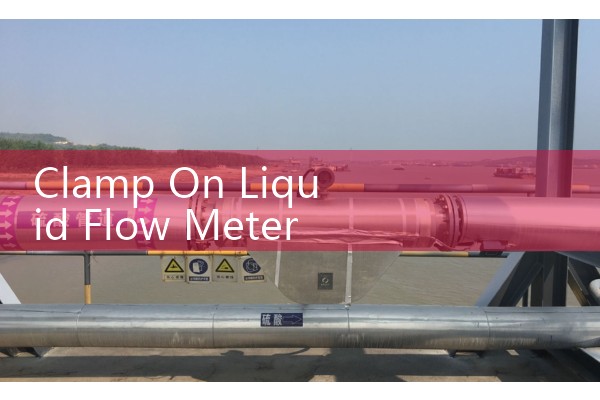
The only catch: permanent installations need a clean, straight pipe run and stable ambient conditions. Vibration and direct sunlight can drift the electronics over time. We recommend installing a small sunshade and checking the mounting straps every six months.
Calibration and Accuracy Checks in the Field
We hear this question often: how do you verify a clamp-on meter without a reference flow meter? One practical method is to inject a known volume into a tank using a positive displacement pump and compare totals. Another approach is to use a secondary measurement like the change in tank level over a timed interval. Engineers at a small chemical plant in Peru did exactly this. They ran a diesel transfer batch of 2,000 liters and compared the clamp-on totalizer to the tank stick reading. The error was 1.2%. That is within the typical 1% to 2% uncertainty for a properly set up transit-time clamp-on meter.
For critical custody transfer you still need a Coriolis or a turbine meter. But for water allocation, energy audits, or leak detection, clamp-on accuracy is more than enough.
Common Setup Errors We See on Customer Sites
Let me list the top mistakes, because they repeat across countries and industries. First, insufficient pipe surface preparation. A little rust flake bounces the sound off angle. Second, wrong pipe data entry. You must measure the pipe outer diameter and wall thickness with actual tools, not just rely on the pipe schedule table. Third, misalignment of sensors. Some technicians eyeball the spacing. Use the mounting frame or the spacing ruler included in the kit. Fourth, ignoring fluid temperature. Most standard transducers work up to 120°C. Above that, you need high-temperature transducers and specialized coupling pads. Fifth, installing too close to a pump discharge. That turbulence screws up the transit-time calculation.
These are small details that kill a test. Most of them are avoidable in 10 minutes with a checklist.
Clamp-On Meter Selection: What to Ask Before You Quote
When you request a quotation from Silver Instruments, do not just say “I need a clamp-on flow meter.” Send us the following: pipe material, outer diameter, wall thickness, liquid type, operating temperature range, pressure (not critical for clamp-on but good to know), and required output signal. If you have a straight run available, include a photo of the pipe with a measuring tape for scale. It helps our application engineers pick the right transducer pairs: small pipe, medium pipe, or large pipe. We offer clamp-on models for pipe sizes from DN15 up to DN3000, but we need the right configuration.
Contact Silver Instruments: Email: [email protected] | Tel: +86-25-68650347 | Whatsapp: +86-25-52155837 | WeChat: +86 15365082610.
FAQ
Can a clamp-on flow meter measure gas flow?
No, clamp-on ultrasonic meters for pipes are designed for liquids only. For gases, we use thermal mass flow meters or other inline technologies. Clamp-on ultrasonic technology needs a liquid medium with decent acoustic conductivity.
What pipe diameters can you test with a portable clamp-on meter?
Standard portable kits cover DN15 to DN1000 with different transducer sets. For pipes up to DN3000, we use large-pipe, low-frequency transducers. Let us know your pipe size and we will give you a specific transducer recommendation.
How long does a clamp-on flow test take to set up?
On a clean, accessible pipe with known dimensions, a trained technician can start the measurement within 10 to 15 minutes. If the pipe surface needs heavy cleaning or the material verification takes time, allow 30 minutes.
Is the clamp-on meter affected by pipe insulation?
Yes, you need to remove the insulation at the sensor mounting points. The transducers must be in direct contact with the bare pipe surface. After the test, you can re-install the insulation.
Do you supply clamp-on flow meters for high-temperature liquids above 200°C?
Standard models work up to 120°C. For temperatures up to 200°C or higher, we offer high-temperature transducers with special waveguide bundles. Please specify the exact operating temperature when requesting a quote.
 Hot Product
 Related AD