

『Hall Effect Flow Meter: Magnetic Pulse Detection Systems for DIY Microfluidics』Related information(clamp on meter|electromagnetic meter|venturi meterrotameter|orifice meter|ultrasonic flow meter|mass flow meter|coriolis mass flow meter|coriolis flow meter|magnetic flow meter|magmeter flow meter|magflow flow meter|mag meter flow meter|electromagnetic flow meter|vortex flow meter|turbine flow meter|thermal mass flow meter|thermal flow meter|rotameter flow meter)
Hall Effect Flow Meter: Magnetic Pulse Detection Systems for DIY Microfluidics
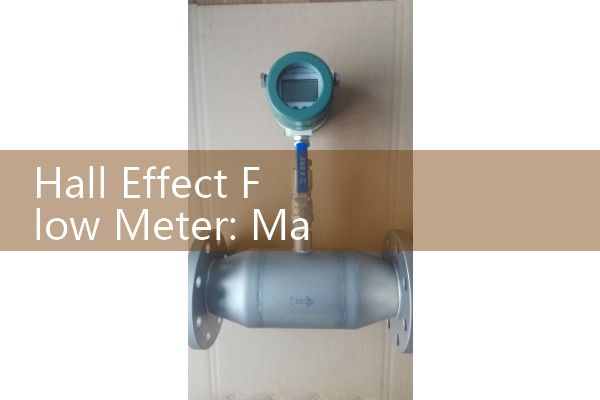
Quick Answer: A Hall effect flow meter uses a magnetic sensor to count pulses from a rotating element inside a micro flow channel. The output is a clean digital frequency, easy to read with an Arduino, PLC, or data logger, no analog filtering needed. Silver Automation Instruments supplies compact pulse output meters for microfluidics, with flow ranges starting at 0.5 ml/min and wetted materials like PEEK, PTFE, and 316L.
How the Hall Effect Sensor Works in a Flow Meter
A miniature turbine or paddle wheel sits in the fluid path. One or more small magnets are embedded in the rotor. Liquid flow spins the rotor, a Hall effect IC detects each magnetic pole passing, and the meter sends a square wave pulse. Every pulse equals a fixed volume, typically 0.02 ml to 0.1 ml depending on pipe ID. The signal frequency is directly proportional to flow rate. In practice, many engineers use a digital input on a microcontroller to count pulses and calculate ml per minute. Because the sensor is contactless, there is no mechanical wear and the pressure drop stays low. A DN4 Hall flow meter we ship to labs in Indonesia often runs at 0.005 to 0.5 L/min with a K-factor around 1200 pulses per litre.
DIY Microfluidics and Why Pulse Output Meters Fit
Syringe pumps and peristaltic pumps set a target flow, but real flow can drift. A Hall effect flow meter acts as a feedback sensor. You get a pulse train that a Raspberry Pi or a PLC high-speed counter can log directly, without a 4-20 mA converter. Last year a research team in Vietnam ordered five DN1.5 Hall flow meters for a droplet microfluidics project. They used a Raspberry Pi to log pulse frequency at 200 Hz and adjusted the pump speed in a Python script. Another lab in Brazil placed a DN2 meter after a syringe pump to confirm actual dispense volume for reagent dosing. Most engineers skip complex analog signal conditioning here and go straight for the digital pulse method. Because the pulse amplitude is clean 5V or 8-24V depending on the sensor, noise immunity is good even on a crowded bench.
Selecting the Right Hall Effect Flow Meter for Your Setup
Start with the tubing ID. Standard microfluidics tubing runs 1/16 inch OD, with inner diameters of 0.5 mm, 1 mm, or 1.6 mm. We match that to meter connections from DN1 to DN4. Wetted material matters. For organic solvents, choose PPS or PTFE bodies with Kalrez seals. For aqueous buffers and cell culture media, a 316L stainless body with EPDM seals works well and handles CIP at 85 °C. Decide your flow range. A DN1 meter covers 0.5 to 50 ml/min, a DN4 covers 10 to 500 ml/min. Output type is usually NPN open collector or push-pull, compatible with 5V and 24V logic. Tell us your fluid type, tubing ID, target flow range, and preferred electrical interface. We will propose a calibrated meter with a K-factor certificate and pinout diagram. Here is the thing: if you need a flow sensor body without metal for MRI or electrochemical setups, we can deliver a fully plastic Hall meter with PTFE turbine.
Connecting Hall Effect Flow Meters to Controllers and DAQ Systems
Three wires are enough: brown for Vcc, blue for ground,
Ordering from Silver Automation Instruments for Microfluidics Needs
We stock standard mini flow meters and also customize small runs for research groups and OEMs. Shipments go to Southeast Asia, Australia, Latin America, the Middle East, and Africa. We ship via DHL or FedEx from our Nanjing warehouse. A typical DN2 Hall flow meter for 10 to 200 ml/min costs less than USD 150 ex-works. For a quote, send us your pipe ID, liquid name, flow range in ml/min, operating temperature, and desired output signal. Contact Silver Automation Instruments at [email protected] or call +86-135-1213-1526. You can also reach us on WhatsApp 86-135-12131526 or WeChat +86 13512131526. We usually reply within 12 hours on business days.
Frequently Asked Questions
Q: Can a Hall effect flow meter measure gas in microfluidics?
A: Yes, but gas flow needs a low-inertia impeller and careful calibration. We supply micro gas Hall meters for air, nitrogen, and CO2, with flow ranges from 10 sccm to 500 sccm on a DN2 connection. Always specify gas type and back pressure when you request a quote.
Q: What is the minimum detectable flow rate?
A: Our smallest Hall flow meter detects flows down to 0.5 ml/min with water at 20 °C. The lower limit depends on fluid viscosity and the turbine start-up torque. For ultralow flows below 0.2 ml/min, we recommend a thermal mass flow meter for liquids and we can discuss a hybrid solution.
Q: Are these meters compatible with syringe pumps?
A: Yes. Most syringe pump systems operate at high pressure and pulseless flow. Place the Hall meter after the pump and use the pulse output to verify actual dispensed volume. The meter pressure rating is 10 bar for metal-body models and 3 bar for plastic-body models.
Q: Do you offer calibration for liquids with different viscosities?
A: We calibrate each meter with a liquid that matches your process: water, ethanol, silicone oil, or sugar solutions. We test at three points across the flow range and provide a K-factor table. Viscosity changes the meter response, so always state your fluid viscosity in cP when ordering.
Q: What is the typical delivery time to Australia or Brazil?
A: Stock mini flow meters ship within 3 working days. Custom calibration adds 5 days. Transit time to Sydney or Melbourne is 5–7 days by courier. To São Paulo or Rio de Janeiro, plan 7–10 days. We ship with all necessary documents for smooth customs clearance.
 Hot Blog
 Related AD