

『Flow Meter Vs Pressure Regulator: Differentiating Volume Control Hardware from Pressure Control Sets』Related information(clamp on meter|electromagnetic meter|venturi meterrotameter|orifice meter|ultrasonic flow meter|mass flow meter|coriolis mass flow meter|coriolis flow meter|magnetic flow meter|magmeter flow meter|magflow flow meter|mag meter flow meter|electromagnetic flow meter|vortex flow meter|turbine flow meter|thermal mass flow meter|thermal flow meter|rotameter flow meter)
Flow Meter Vs Pressure Regulator: Differentiating Volume Control Hardware from Pressure Control Sets
Quick Answer: A flow meter measures and reports volume flow or mass flow. A pressure regulator controls downstream pressure. Use a flow meter when you need flow rate, total flow, batching, or billing. Use a pressure regulator when you need stable pressure to protect equipment or hold a process variable.
Silver Automation Instruments supplies industrial flow meters and pressure transmitters to end users and distributors in Southeast Asia, Oceania, Latin America, Africa, and the Middle East. We often get questions from customers who compare flow meters and pressure regulators. Some call us because a pressure regulator failed to show flow. Others bought a flow meter and expected it to keep pressure constant. The flow meter vs pressure regulator comparison matters at the specification stage. The two hardware groups solve different problems.
What a Flow Meter Does
A flow meter reads the actual volume or mass of fluid moving through a pipe. It sends a signal to a PLC, a panel meter, or a paperless recorder. Common outputs are 4-20 mA HART, pulse, RS485, and Modbus. Flow meters handle line sizes from DN15 to DN300 and larger. They can measure kg/h, L/min, m3/h, or SCFM depending on the model.
Silver Instruments supplies Coriolis mass flow meters, electromagnetic flow meters, ultrasonic flow meters, vortex flow meters, oval gear flow meters, and thermal mass flow meters. Each type fits a different media. For example, an electromagnetic flow meter needs a conductive liquid. A thermal mass flow meter suits biogas or compressed air. An oval gear flow meter handles diesel, fuel oil, and other viscous fluids. A Coriolis flow meter gives mass flow, density, and temperature for chemical and food applications.
Think of a flow meter as volume control hardware. It gives the flow variable to a controller. The meter reports actual volume or mass. That data can be used to control a valve, start a pump, or record consumption.
What a Pressure Regulator Does
A pressure regulator does not measure flow. It maintains a set downstream pressure. It opens or closes in response to pressure changes. It can reduce high inlet pressure to a lower outlet pressure. It cannot totalize volume or send flow data. In a gas line, a regulator may hold 3 bar downstream from a 10 bar source. In a liquid line, a back pressure regulator may keep upstream pressure stable for spraying or dosing.
Pressure regulators are common in fuel gas supply, steam conditioning, water supply, and air service. They protect seals, valves, and instruments from overpressure. But they do not tell you how many liters per minute passed through the line.
A pressure control set often includes a pressure regulator, a pressure gauge, and a relief valve. This set keeps pressure within a safe range. It belongs to pressure control hardware, not volume measurement.
Why the Confusion Happens
Both devices sit inline. Both connect to pipes. Both can be part of a control loop. A process drawing may show a flow meter and a pressure regulator close together. A technician sees one reading and assumes both devices share the same purpose. This is not correct.
We have seen this on customer sites many times. A food plant in Indonesia had a pressure regulator on a water line. They wanted total daily usage. The regulator could not supply that data. We supplied an electromagnetic flow meter with pulse output to a paperless recorder. The daily total was then visible in m3.
Flow Meter Types and When to Specify One
Choose a flow meter when the process needs volume control, mass balance, dosing, leak detection, or billing. For conductive liquids like wastewater, acids, or slurries, use an electromagnetic flow meter. For clean water, seawater, and desalination plant flow, an ultrasonic flow meter works well. For steam, compressed air, or gases, use a vortex flow meter or a thermal mass flow meter. For oils, diesel, and high viscosity fluids, an oval gear flow meter is a strong fit. For high accuracy mass measurement in chemical or food plants, a Coriolis mass flow meter is the right choice.
Here is the thing. The pipe size, fluid type, temperature, pressure, and flow range decide the model. A seawater flow meter for a desalination plant in Saudi Arabia may need DN200, 4-20 mA HART, and corrosion resistant electrodes. A diesel flow meter for a mining operation in Chile may need DN25, an oval gear design, and a local display. The flow meter outputs a signal. The pressure regulator only keeps pressure at a setpoint.
Pressure Regulator Roles in Industrial Processes
Use a pressure regulator when a pump, valve, filter, or instrument needs a stable pressure. Common cases include gas supply to burners, water supply to washdown stations, steam reduction to heat exchangers, and air supply to pneumatic actuators. A pressure regulator may be set at 4 bar. It will hold th
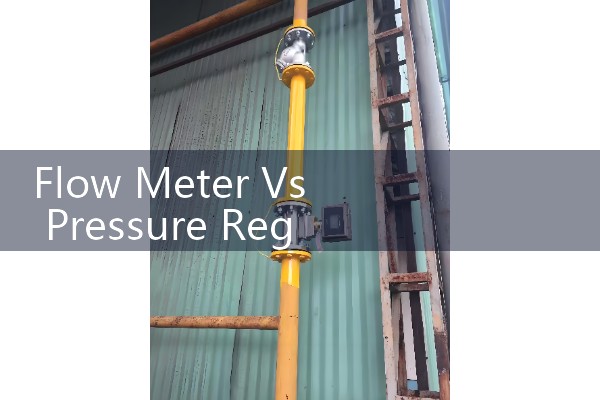
Pressure regulators also protect downstream equipment. A sudden pressure spike can damage seals and diaphragms. A regulator absorbs that spike. For flow data, you still need a flow meter. Many process skids use both. The regulator controls pressure. The flow meter records volume or mass.
Application Scenarios Where You Need Both
A chemical dosing skid is a good example. The process needs a steady pressure to inject a reagent. It also needs total flow to confirm dosage. A pressure regulator holds the line at 2 bar. A Coriolis mass flow meter measures reagent flow in kg/h. Both devices work together. One does not replace the other.
We supplied a Coriolis mass flow meter to a paint manufacturer in Southeast Asia. The solvent line had a pressure regulator holding 4 bar. The customer wanted batch totals and density. The regulator could not provide those parameters. The Coriolis meter delivered mass flow, density, and temperature through 4-20 mA HART. The plant now logs every batch without manual readings.
Last year a customer in Vietnam asked us for a device to control water flow. They had a pressure regulator installed. The line pressure was stable but the flow changed with valve opening. We supplied an electromagnetic flow meter for DN50 pipe. The output went to a PLC. Now the loop controls flow directly. The pressure regulator stays in the line for protection.
Key Differences in One View
Flow meters measure flow. Pressure regulators control pressure. Flow meters output flow rate and often total flow. Pressure regulators maintain a mechanical pressure setting. Flow meters need electrical supply in most cases. Pressure regulators may work without power. Flow meters range from DN15 to large pipelines. Pressure regulators also cover many sizes but their selection is based on pressure, media, and capacity. Flow meters can include HART, Modbus, pulse, or RS485. Pressure regulators rarely include digital output. Flow meters support batching, billing, and custody transfer. Pressure regulators support overpressure protection and pressure stability.
How to Specify the Right Hardware
Send us these process details. We need the fluid, pressure in bar, temperature in °C, pipe size in DN, flow range, viscosity in cP, and conductivity in µS/cm for electromagnetic meters. Also tell us the output signal. Most customers request 4-20 mA HART or pulse. If the zone is hazardous, we need to know ATEX Zone 1 or Zone 2. If the fluid is seawater, tell us the chloride level. If the fluid is diesel, tell us the viscosity and the temperature.
Based on that data, we will recommend a flow meter model and a pressure regulator type if needed. Do not send only the pipe size. A DN50 pipe can carry water, air, diesel, or acid. Each fluid needs a different flow meter technology. A pressure regulator also needs the inlet pressure, outlet pressure, and flow coefficient. We can help with pressure transmitters as well.
Silver Instruments Product Fit
Silver Automation Instruments is a flow meter manufacturer and pressure transmitter supplier. We stock and support Coriolis mass flow meters, electromagnetic flow meters, ultrasonic flow meters, vortex flow meters, oval gear flow meters, thermal mass flow meters, pressure transmitters, and paperless recorders. Our customers include water and wastewater plants, oil and gas contractors, chemical processors, food and beverage facilities, and marine operators.
We ship to Southeast Asia, Oceania, Latin America, Africa, and the Middle East. We support distributors and end users with 10 to 100 staff. We offer English documentation, wiring drawings, and technical help by WhatsApp and WeChat.
For a quote, send us your pressure in bar, temperature in °C, pipe size in DN, and flow range. Tel: +86-25-68650347. Whatsapp: +86-25-52155837. WeChat: +86 15365082610.
FAQ
Can a pressure regulator measure flow?
No. A pressure regulator only controls pressure. It does not have a flow sensor, totalizer, or output signal.
Can a flow meter control pressure?
No. A flow meter reports flow. Some advanced flow meters with a PID controller can send a signal to a valve, but they do not regulate pressure directly.
Which flow meter is best for seawater desalination?
An ultrasonic flow meter or an electromagnetic flow meter is a good fit. The choice depends on pipe size, conductivity, and installation.
Do I need both a flow meter and a pressure regulator?
In many processes yes. The pressure regulator holds stable pressure. The flow meter gives flow rate and total flow. Both are common on chemical dosing, fuel lines, and gas supply.
What details do I need to send for a quote?
Send fluid, pressure in bar, temperature in °C, pipe size in DN, flow range, viscosity, conductivity, and output signal. We will reply with a specific model.
 Hot Blog
 Related AD