

『Volumetric Flow Meter Working Principle: Mechanical and Electronic Pulse Physics』Related information(clamp on meter|electromagnetic meter|venturi meterrotameter|orifice meter|ultrasonic flow meter|mass flow meter|coriolis mass flow meter|coriolis flow meter|magnetic flow meter|magmeter flow meter|magflow flow meter|mag meter flow meter|electromagnetic flow meter|vortex flow meter|turbine flow meter|thermal mass flow meter|thermal flow meter|rotameter flow meter)
Volumetric Flow Meter Working Principle: Mechanical and Electronic Pulse Physics
Quick Answer: A volumetric flow meter measures liquid by separating it into fixed-volume packets. Mechanical designs turn fluid movement into rotor or piston cycles. Those cycles drive a local mechanical counter or an electronic pulse output for remote totalizing and batch control.
What Counts as a Volumetric Flow Meter
A volumetric flow meter captures fluid in known volume segments. Each segment equals a fixed volume such as 0.01 L per pocket or 0.1 L per piston stroke. As fluid moves, the meter fills and empties these segments again and again. Total volume is simply segment volume multiplied by the number of cycles. This is why plants use volumetric meters for fuels, lubricants, edible oils, solvents, and chemical additives.
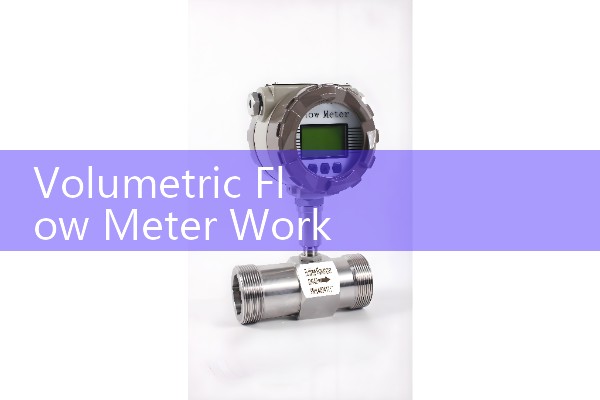
Common designs include oval gear, gear, rotary piston, nutating disc, and diaphragm meters. Silver Instruments supplies oval gear flow meters with pulse output for diesel, palm oil, molasses, and other clean or viscous liquids. We have supplied units for a paint manufacturer in Vietnam who needed batch dosing of resin in 200 L drums.
Mechanical Pulse Physics in Volumetric Flow Meters
In an oval gear meter, two oval-shaped rotors mesh inside a measuring chamber. Fluid pressure pushes the rotors. One complete rotation of the rotor pair displaces a fixed volume. If the rotors have a known chamber volume of 0.05 L per revolution, 20 revolutions mean 1 L passed through. This is direct mechanical measurement. No flow profile correction is needed.
A mechanical register can be geared directly to the rotor shaft. The register displays total liters or gallons on a local counter. This is common on fuel oil meters and lubrication oil skids. Mechanical output has no power requirement. It works in remote areas where loop power is not available. That is why some diesel users in Papua New Guinea still prefer local mechanical totalizers.
Electronic Pulse Output from the Same Rotor Motion
The same rotor motion can drive an electronic pickup. A magnet is mounted on the rotor or on a follower shaft. A Hall effect sensor or reed switch detects each pass of the magnet. Each pulse equals one fixed volume. The output is often an open collector NPN or PNP signal. Common pulse values are 10 pulses per liter, 100 pulses per liter, or 0.1 L per pulse. This depends on the meter size and sensor design.
The pulse train connects to a PLC, batch controller, or paperless recorder. The control system counts pulses over time. Frequency gives flow rate. Total count gives total volume. This is not a complex signal. Most plants prefer pulse over analog when they need accurate batch control. For example, a food factory in Thailand filling 20 L cooking oil pouches can use a Silver Instruments oval gear meter with 100 pulses per liter output. The PLC stops the filling valve when the expected pulse count is reached.
Mechanical Registers vs Electronic Pulse Output
Mechanical registers are simple and durable. They do not drift with EMI or loop wiring issues. But they cannot send data to a remote PLC. A plant operator must walk to the meter to read the counter. In practice, most engineers skip this for new projects. Electronic pulse output is more practical for automation.
Electronic pulse outputs need wiring and a power source if the sensor is powered. Hall effect sensors normally run on 5 to 30 V DC. Reed switch outputs are passive and do not need sensor power. However, reed switches have a lower maximum freque
Key Sizing Parameters for a Quote
To specify a volumetric flow meter with pulse output, send us the liquid name and viscosity in cP, flow range in L/h or kg/h, pipe size DN, operating pressure in bar, temperature in °C, and required pulse ratio or signal type. For viscous fluids like heavy fuel oil at 380 cSt or molasses at 5000 cP, the pressure drop and rotor speed limit must be checked. For low viscosity solvents at 0.8 cP, meter accuracy can shift if clearances are too wide.
Silver Instruments offers oval gear flow meters from DN10 to DN100. Typical accuracy is ±0.5% of reading for medium viscosity liquids. Materials include aluminum, cast iron, and stainless steel. Pulse outputs include NPN, PNP, reed switch, and Namur. Optional 4-20 mA HART output is also available on some electronic models. For hazardous areas, we can supply Ex d or Ex ia versions for ATEX Zone 1 or Zone 2. Mechanical register only versions are also available.
Common Applications We Support
Diesel and fuel oil consumption monitoring. Palm oil and cooking oil transfer in Malaysia and Indonesia. Adhesive and resin dosing in Vietnam. Bitumen and heavy fuel oil metering in the Middle East. Solvent and methanol batching in Peru. Lube oil skids for marine engines in Singapore. The pulse output helps with remote totalization and batch control.
A wastewater contractor in the Philippines used a DN25 oval gear meter with NPN pulse output to dose 5 L of polymer per batch. The pulses were counted by a simple PLC high speed input. No analog scaling was required. Total error was controlled within 0.1 L per batch. That is why volumetric pulse meters remain popular for low flow batching.
FAQ
What is a volumetric flow meter working principle?
It traps fluid in fixed-volume chambers and counts how many times those chambers fill and empty. Rotor or piston cycles are converted to total volume.
What is the difference between mechanical pulse and electronic pulse output?
Mechanical registers display total volume on a local counter. Electronic pulse output sends a switch or transistor signal to a PLC or batch controller for remote counting.
Can volumetric flow meters handle high viscosity liquids?
Yes. Oval gear and gear meters work well with fuels, oils, resins, and molasses. You must specify viscosity in cP and flow range so the factory can set clearances and rotor speed.
What pulse output options does Silver Instruments provide?
Reed switch, NPN open collector, PNP open collector, and Namur. Optional 4-20 mA HART output is possible on some models for flow rate monitoring.
How do I request a quote for a volumetric flow meter with pulse output?
Send your liquid, viscosity in cP, flow range in L/h, pipe size DN, pressure in bar, temperature in °C, and power supply to Silver Instruments. You can reach us on WhatsApp at 86-135-12131526 or call Tel: +86-135-1213-1526. WeChat: +86 13512131526.
Contact Silver Instruments for volumetric flow meter selection and pricing. Send us your liquid, viscosity in cP, flow range in L/h, pipe size DN, pressure in bar, and temperature in °C. That is the fastest way to get a workable quotation.
 Hot Blog
 Related AD